
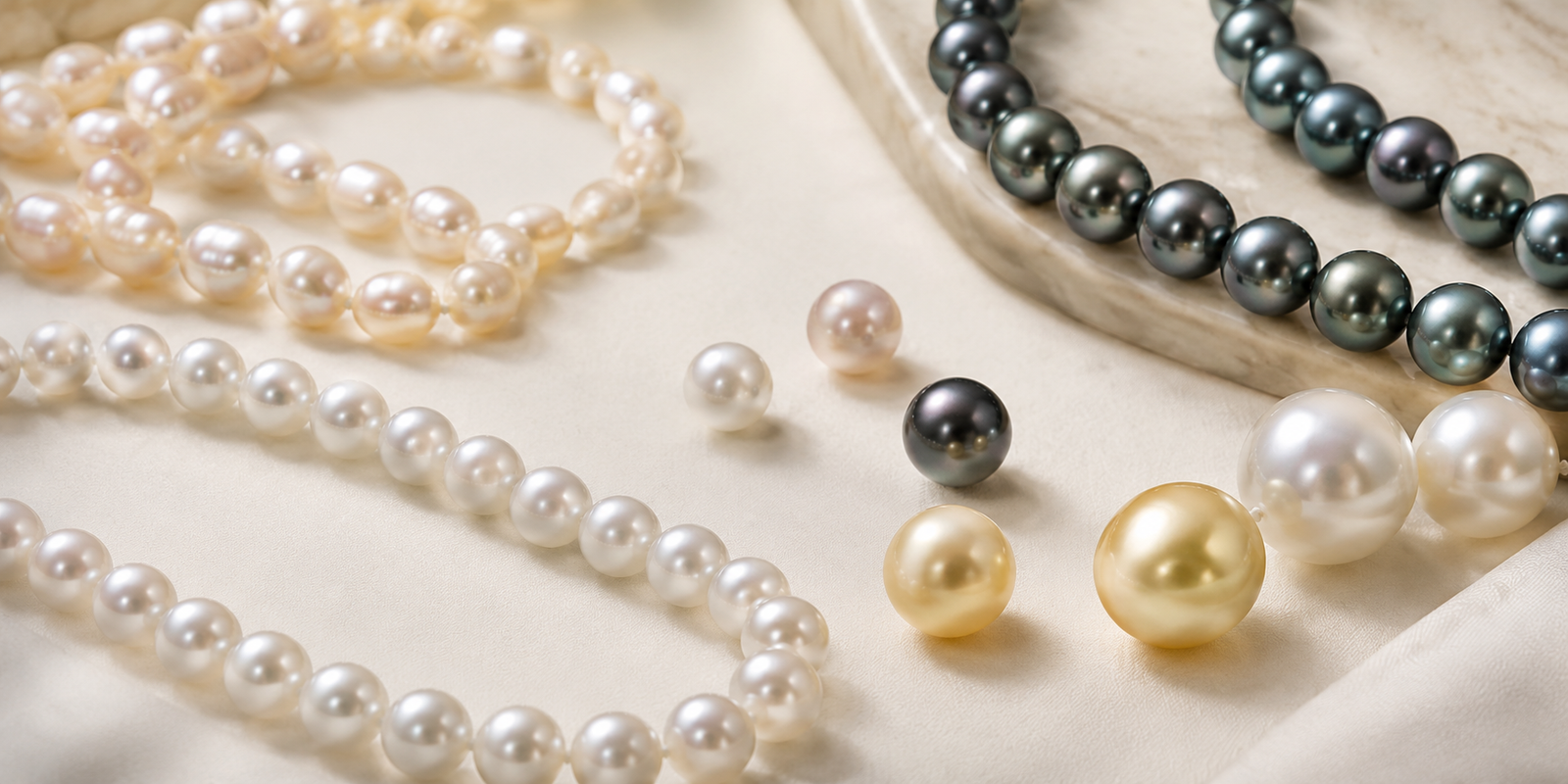
How much do real pearls cost? The answer can range from less than one hundred dollars for simple cultured freshwater pearl jewelry to several thousand dollars for finely matched Akoya, Tahitian, or South Sea pearl strands.
But price alone does not tell you whether a pearl is real, beautiful, or worth buying.
Many shoppers ask, “How much do real pearls cost?” before they begin comparing pearl types, sizes, and jewelry settings.
A pearl’s value is influenced by its type, size, shape, color, luster, surface quality, nacre quality, matching, metal materials, and craftsmanship. Two necklaces that look similar in a photograph can therefore have very different prices.
This guide explains typical pearl jewelry price ranges, what makes one pearl more valuable than another, and how to choose a piece that fits your budget without paying only for a luxury name.
First: There Is No Single Correct Price for Pearls
Two pearl necklaces may look similar in a photograph but differ significantly in value.
For example, one necklace may feature smaller freshwater cultured pearls with gentle natural surface variation and a sterling silver clasp. Another may feature highly matched Akoya cultured pearls with brighter luster and a solid gold clasp.
Both can be beautiful. They are simply different products at different price points.
The price ranges below are intended as general online retail shopping guidance. Actual prices can vary based on quality, size, materials, design, brand and availability.
How Much Do Real Pearls Cost by Type?
The ranges below are approximate retail references rather than fixed market prices. Actual prices vary by pearl quality, size, matching, metal materials, craftsmanship, brand, retailer, and current market conditions.
| Pearl Type | Common Jewelry Price Range | Full Strand Necklace Range | Why Prices Vary |
|---|---|---|---|
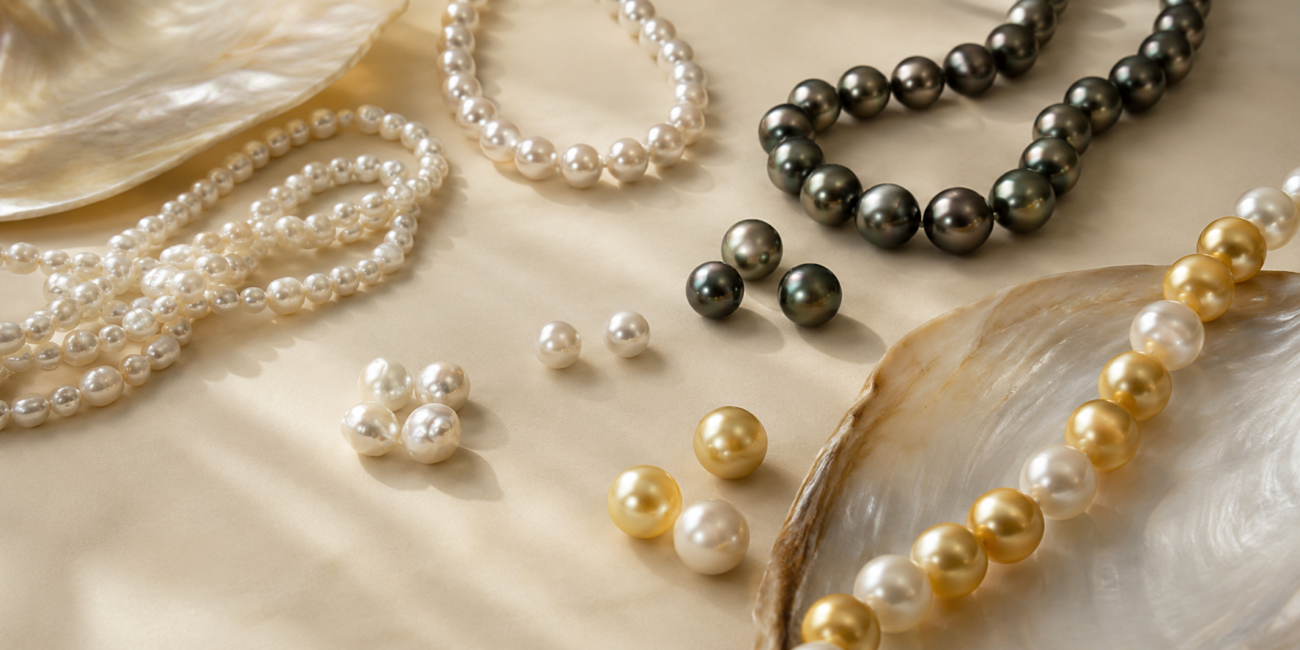
| Freshwater Cultured Pearls | Approximately $40–$500+ | Approximately $80–$1,500+ | Shape, luster, roundness, surface and metal materials |
| Akoya Cultured Pearls | Approximately $150–$1,000+ | Approximately $500–$3,000+ | Roundness, bright luster, matching, size and clasp material |
| Tahitian Cultured Pearls | Approximately $200–$1,500+ | Approximately $700–$6,000+ | Color, size, matching, luster and rarity |
| South Sea Cultured Pearls | Approximately $300–$2,500+ | Approximately $2,000–$15,000+ | Large size, color, matching, luster and cultivation rarity |
Price reference reviewed and updated: July 2026.
These approximate retail ranges are provided for general educational purposes. Actual prices may vary by pearl quality, size, matching, metal materials, craftsmanship, retailer, brand, and market conditions. They should not be treated as professional appraisals or guarantees of value.
Exceptional pieces, luxury-brand jewelry, unusually large pearls, rare colors or highly matched strands may cost far more than these general ranges.
So, how much do real pearls cost in everyday jewelry? Freshwater pearl pieces are often the most accessible, while finely matched Akoya, Tahitian, and South Sea pearls can reach much higher price levels.
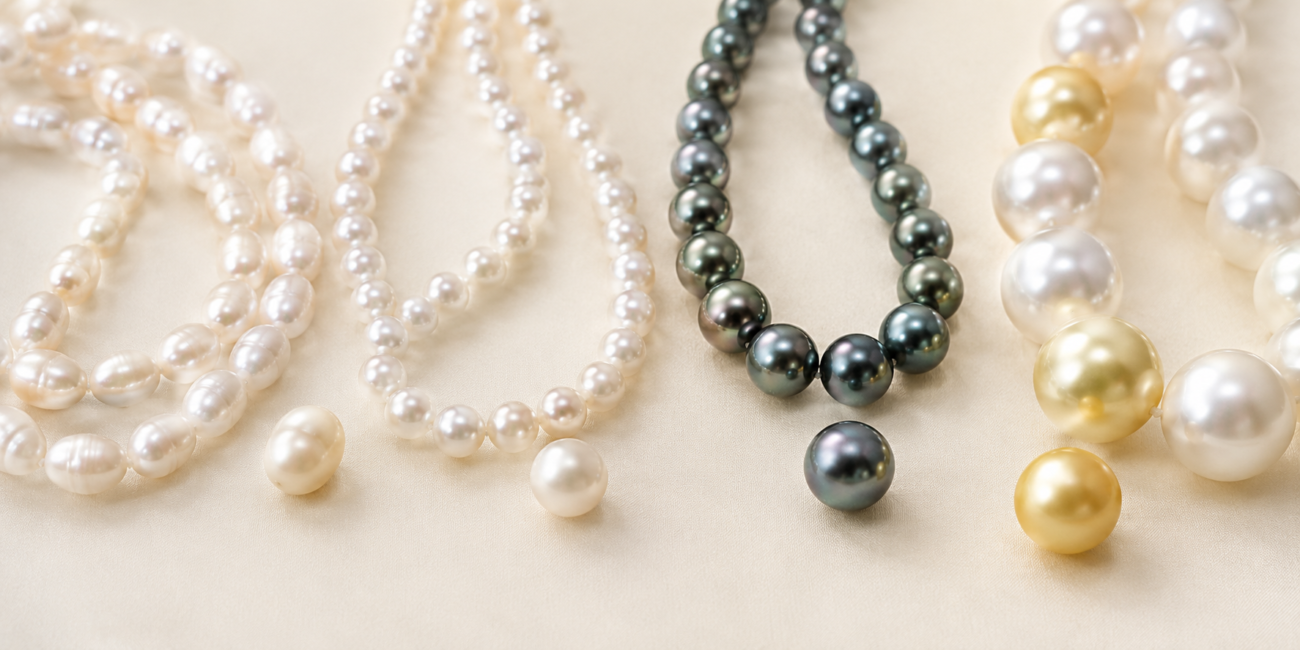
What Determines the Price of a Real Pearl?
Pearl type is only one part of the price.
GIA evaluates natural and cultured pearls using seven pearl value factors: size, shape, color, luster, surface quality, nacre quality, and matching. When the other factors are equal, larger pearls, stronger luster, cleaner surfaces, finer nacre, and better matching generally increase value.
The jewelry setting also matters. Sterling silver, solid gold, plated metals, clasp quality, design complexity, and hand-finishing can all influence the final retail price.
Freshwater Pearls: Beautiful Options at Accessible Prices
Freshwater cultured pearls are often the most approachable choice for genuine pearl jewelry.
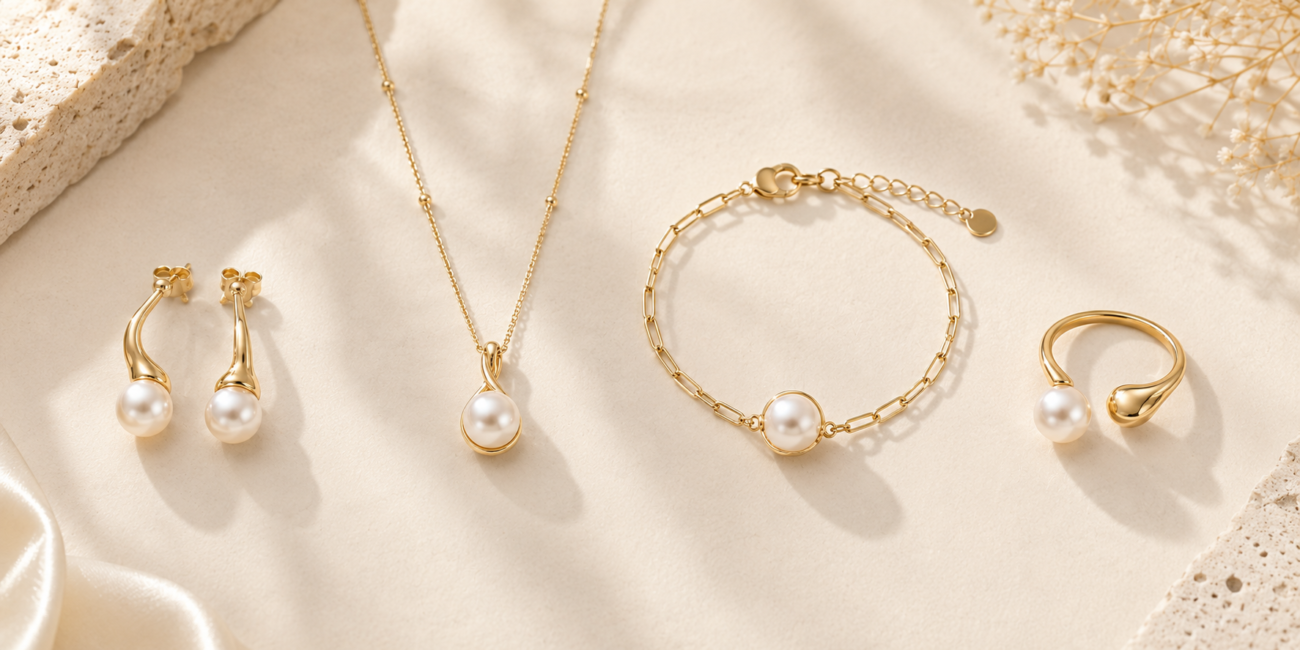
Simple freshwater pearl earrings, rings, bracelets or pendants may be available at relatively modest prices, especially when paired with sterling silver or gold-plated settings. Necklaces vary more widely depending on the number of pearls used, their size, their shape and how closely they are matched.
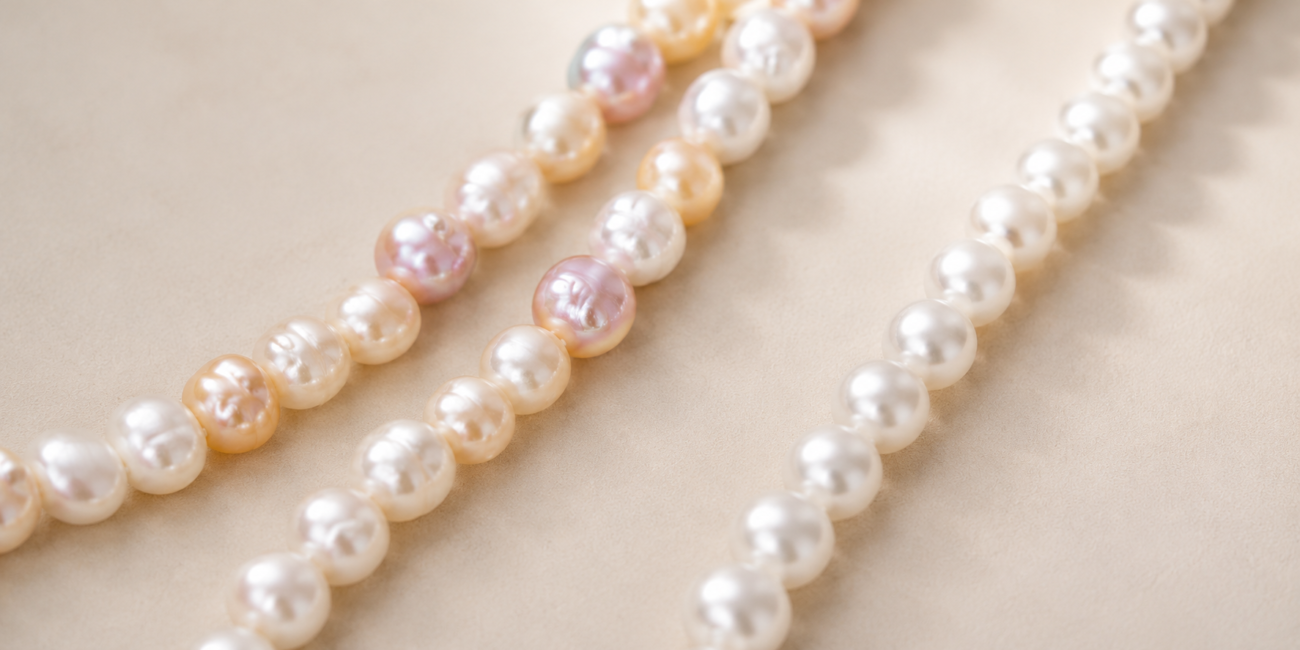
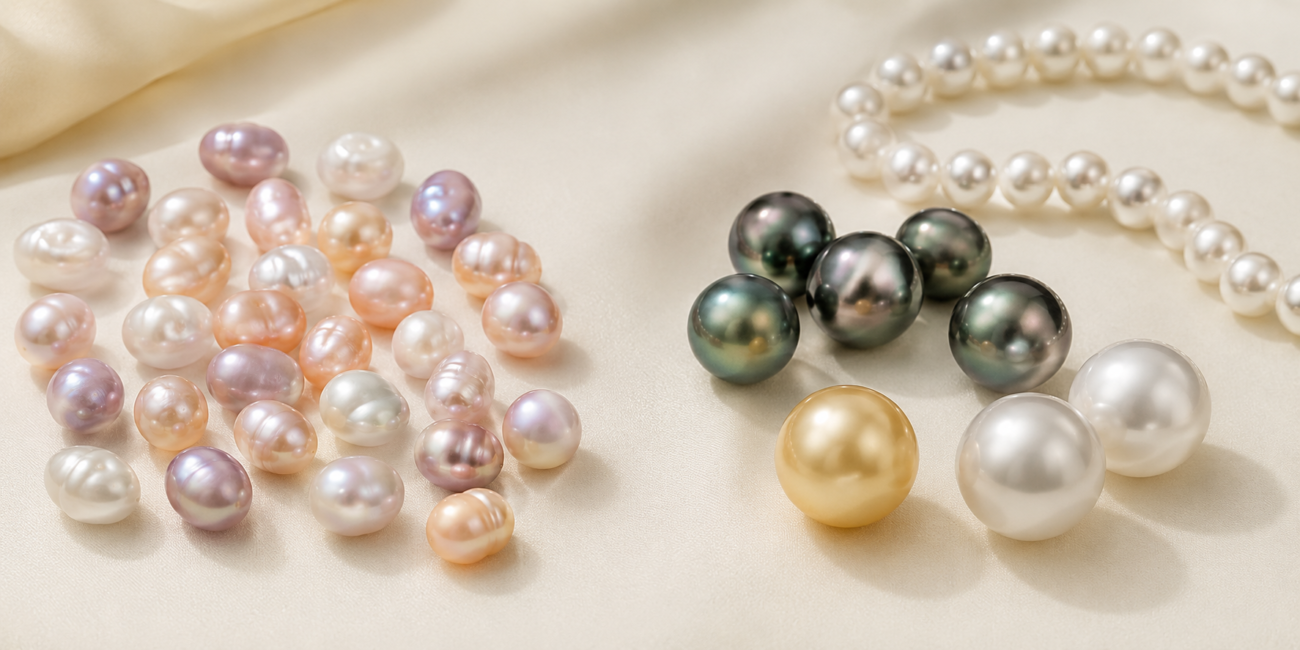
A baroque freshwater pearl necklace may be priced differently from a nearly round, high-luster freshwater strand, even when both are genuine cultured pearls.
If you are still deciding between pearl varieties, our freshwater vs. saltwater pearls guide explains the differences in appearance, cultivation, availability, and price.
What commonly raises the price of freshwater pearls?
- Larger pearl size
- More rounded shapes
- Stronger luster
- Cleaner surfaces
- Better matching across a strand
- Solid gold settings or clasps
- More detailed craftsmanship
Our pearl size guide can help you compare how different millimeter sizes look in earrings, necklaces, and everyday jewelry.
Freshwater pearls can be an excellent choice for shoppers who want real pearl jewelry with beauty, personality and everyday wearability.
Akoya Pearls: Why the Classic White Strand Costs More
Akoya cultured pearls are known for their traditional white appearance and bright, crisp luster.
Because shoppers often expect Akoya strands to look round, symmetrical and evenly matched, higher-quality Akoya jewelry usually requires careful selection. This can increase the price, especially in necklaces using many pearls.
Smaller Akoya earrings or pendants may offer an entry point into this classic look, while a beautifully matched strand necklace will often cost substantially more.
Akoya pearl prices tend to increase with:
- Larger millimeter size
- Strong, mirror-like luster
- Very round shapes
- Clean-looking surfaces
- Uniform matching
- Solid gold findings
- Premium brand craftsmanship
Akoya pearls are often worth considering when you want a traditional, polished pearl piece for weddings, milestone gifts or timeless everyday elegance.
Tahitian Pearls: Price Influenced by Color and Character
Tahitian cultured pearls are admired for their darker shades and colorful overtones.
A single Tahitian pearl pendant or pair of earrings may be more accessible than a full strand necklace, since matching multiple pearls in size, color and luster can require far more selection.
A Tahitian necklace with rich peacock, green, silver or multicolor tones may command a higher price when the pearls complement one another beautifully.
Factors that can increase Tahitian pearl pricing include:
- Larger pearl sizes
- Attractive body color and overtone
- Strong luster
- Rounder shapes
- Carefully matched strands
- More unusual or desirable color combinations
Baroque Tahitian pearls may offer a more organic, modern appearance, while round Tahitian strands often fall into higher price ranges because consistent roundness and matching are harder to achieve.
South Sea Pearls: Larger Size and Luxurious Presence
South Sea cultured pearls are often among the most expensive commonly available cultured pearls.
Their larger sizes, white or golden colors and softly luminous appearance give them an unmistakable presence. Even a single South Sea pearl used in a pendant or pair of earrings can create a statement.
A full South Sea pearl strand may cost considerably more, especially when the pearls are large, beautifully matched and set with fine metal components.
South Sea pearl pricing is especially influenced by:
- Pearl size
- White, silver-white or rich golden color
- Luster
- Surface appearance
- Shape
- Matching quality
- Solid gold and fine jewelry construction
South Sea pearls are often chosen for milestone gifts, special occasions or jewelry intended to feel especially luxurious.
Do Round Pearls Cost More Than Baroque Pearls?
Often, yes, when other qualities are similar.
Perfectly round pearls are generally more difficult to produce consistently, especially in a beautifully matched necklace. Because of this, round pearls commonly carry higher prices than irregular shapes.
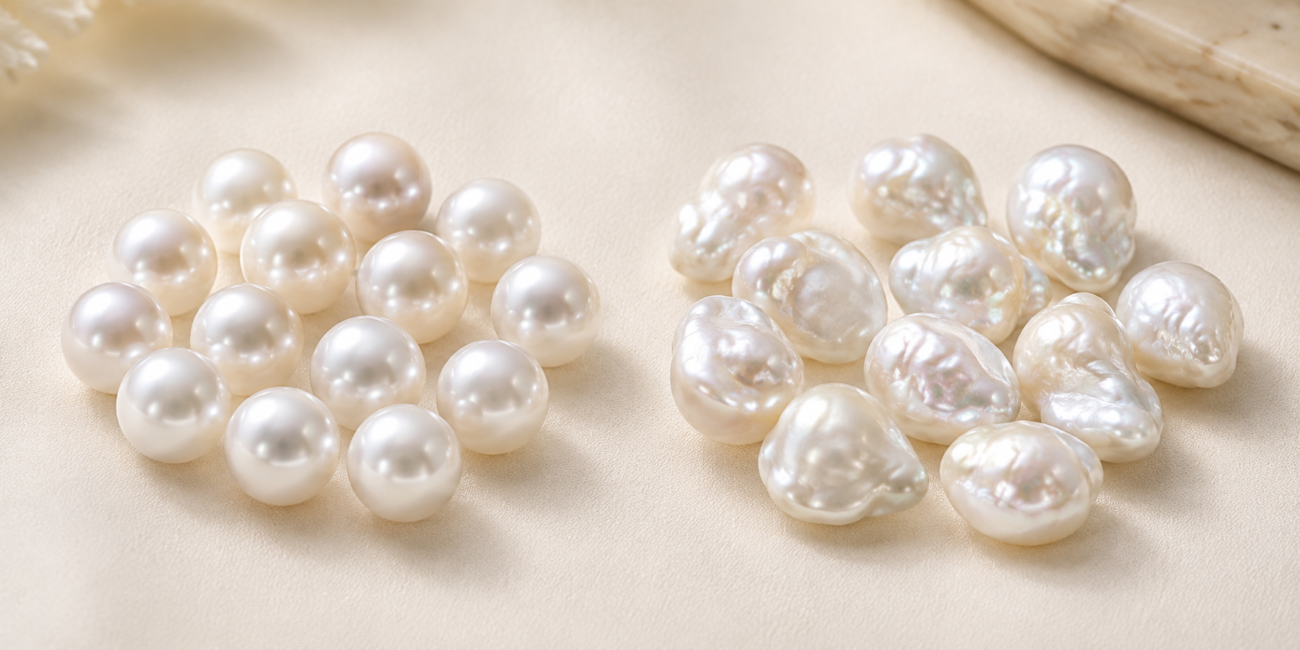
However, baroque pearls are not simply a lower-cost substitute.
A high-luster baroque pearl with beautiful color and an artistic shape can be a deliberate design choice. Many shoppers prefer baroque pearls because every piece feels unique.
A lower price does not necessarily mean lower beauty. It may simply reflect a different shape and styling preference.
Do Minor Blemishes Make Pearls Much Cheaper?
Surface appearance affects price, but it should never be considered on its own.
A pearl with a very clean surface and beautiful luster is generally less common than one with visible natural markings. As a result, cleaner surfaces may increase price.
However, a lightly blemished pearl with excellent luster can still look stunning when worn. For many buyers, this offers an ideal balance between beauty and value.
When comparing prices, ask:
- Are the marks visible during normal wear or only in close-up photos?
- Does the pearl still look bright and luminous?
- Is the seller clearly describing the surface?
- Is the pricing fair for the overall appearance?
A small surface mark should not automatically stop you from choosing a piece you genuinely love.
Why Luster Often Matters More Than Perfect Surface
Luster is the glow that gives a pearl its beauty.
A pearl may have a relatively clean surface but still appear flat or dull. Another pearl may have a tiny natural mark yet look radiant because its luster is strong.
For everyday jewelry, shoppers often find that bright luster makes a greater visual difference than chasing a perfectly clean surface.
When photographs are available, look for pearls that appear lively, reflective and luminous rather than chalky or flat.
Why Metal Materials Affect the Final Price
The pearl is only part of the finished jewelry piece.
A necklace clasp, earring post, ring setting or pendant chain may be made from:
- Sterling silver
- Gold vermeil
- Gold-filled metal
- Solid gold
- Platinum or other fine jewelry materials
Solid gold components will generally increase price compared with sterling silver or plated finishes. This does not necessarily mean one choice is right for everyone. The best material depends on your budget, sensitivity concerns, wearing habits and how long you hope to keep the piece.
A good product description should clearly state the metal used, rather than focusing only on the pearl.
Why Brand and Craftsmanship Matter
Pearl pricing can also reflect design work, hand selection, setting quality, clasp construction, packaging, warranty, customer service and brand reputation.
A carefully designed pearl necklace is not priced only by counting pearls. You may also be paying for:
- Better matching
- More secure findings
- More refined design
- Quality control
- Responsive customer service
- Clear return policies
- Reliable material disclosure
That does not mean the most expensive piece is automatically the best choice. It means shoppers deserve enough information to understand what makes one product different from another.
How to Know Whether the Price Feels Fair
Before purchasing pearl jewelry, look for the following details:
- Pearl type is clearly stated
- Cultured or imitation status is disclosed
- Size is listed in millimeters
- Shape is described accurately
- Surface quality is explained
- Metal materials are clearly identified
- Photographs show the jewelry closely
- Return and exchange information is easy to find
A transparent seller should help you understand why a piece is priced the way it is.
Final Thoughts: Buy the Pearl That Makes Sense for You
Real pearl jewelry is available at many price points.
Freshwater cultured pearls can offer genuine beauty and accessible elegance. Akoya pearls provide a classic white pearl look. Tahitian pearls offer darker tones and individuality. South Sea pearls bring larger size and luxurious presence.
The most expensive pearl is not automatically the best pearl for your life. A beautiful piece is one that fits your personal style, suits your budget and comes with clear, honest information about what you are buying.
Ready to Choose Pearls Online with Confidence?
Price is only one part of a smart purchase. In our next guide, we explain how to evaluate pearl jewelry online, what to look for in product photos and descriptions, and how to care for your pearls after they arrive.
Finding Real Pearl Jewelry at a Price That Makes Sense
At LumiSerene, we believe pearl jewelry should be described clearly rather than hidden behind vague luxury language.
Our product pages identify cultured freshwater pearls, relevant sizes, metal materials, natural variations, and care information so you can understand what you are choosing before you order.
Each piece is carefully checked for pearl appearance, setting condition, component function, and overall presentation before packing.
For U.S. customers, we currently provide tracked delivery, a 14-day return window for eligible unworn items in their original condition, and a 30-day quality promise for qualifying damage, defects, or incorrect items.
Choose the piece that fits your style, budget, and next chapter—not simply the highest price tag.
EXPLORE FRESHWATER PEARL JEWELRY
Cultured freshwater pearls · Tracked U.S. delivery · 30-day returns · 30-day quality promise
Frequently Asked Questions
How much do real freshwater pearls cost?
Simple cultured freshwater pearl jewelry may be available at accessible prices, while larger, rounder, more lustrous, cleaner, and better-matched pearls generally cost more. Metal materials and craftsmanship also affect the final price.
Why are some real pearls inexpensive?
A lower price does not automatically mean a pearl is fake. Freshwater cultured pearls are produced in greater quantities than rare natural pearls and some saltwater varieties, making genuine pearl jewelry available across a wider range of prices.
Are cultured pearls real?
Yes. Cultured pearls form inside living mollusks. People initiate the cultivation process, but the mollusk creates the pearl and deposits its nacre.
Do larger pearls always cost more?
Larger pearls generally cost more when pearl type and the other quality factors are similar. However, a smaller pearl with stronger luster, a cleaner surface, and better matching may be more valuable than a larger lower-quality pearl.
Which type of pearl is usually the most expensive?
South Sea pearls and rare natural pearls often reach higher price levels, but value still depends on size, shape, color, luster, surface, nacre, matching, provenance, and jewelry construction.

3 thoughts on “How Much Do Real Pearls Cost? A Practical Pearl Jewelry Price Guide”