

Buying pearl jewelry online can feel difficult when product photos, pearl descriptions, sizes, metal materials, and quality claims vary from one seller to another.
So, how do you buy pearl jewelry online without relying only on a polished photograph?
The most useful product pages clearly identify the pearl type, size, shape, luster, surface characteristics, metal components, dimensions, care requirements, shipping terms, and return policy. These details help you understand what you are purchasing and whether the piece suits your style, budget, and everyday needs.
This guide explains how to buy pearl jewelry online with greater confidence, what quality details to compare, which seller claims deserve closer attention, and how to care for your jewelry after it arrives.
Pearl Jewelry Online Buying Checklist
Before placing an order, check whether the product page clearly explains:
- Whether the pearls are cultured, natural, or imitation
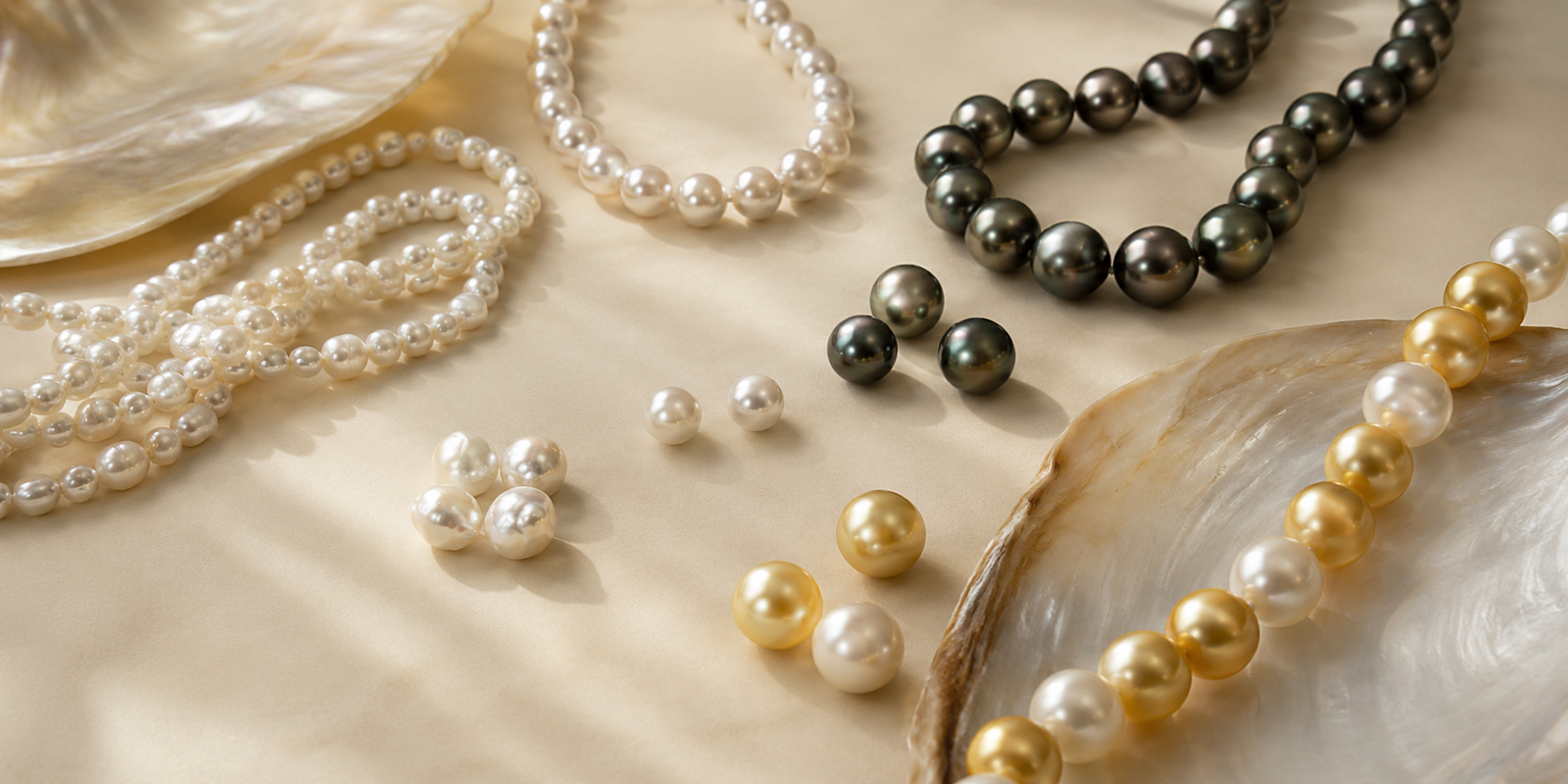
- The pearl type, such as freshwater, Akoya, Tahitian, or South Sea
- Pearl size in millimeters
- Shape, color, luster, and natural surface characteristics
- Metal and plating materials
- Necklace, bracelet, ring, or earring dimensions
- Whether photographs show realistic scale and wearing effect
- Shipping times and tracking
- Return and quality policies
- Care and storage instructions
The FTC advises consumers to distinguish between natural, cultured, and imitation pearls. Cultured pearls form inside mollusks, while imitation pearls are manufactured from materials such as glass or plastic.
How to Buy Pearl Jewelry Online With Confidence
When shopping for pearl jewelry online, you cannot touch the pearls, compare them under natural light, or examine every metal component in person. This makes clear and specific product information especially important.
A trustworthy pearl jewelry listing should help you understand what you are buying, not simply present a beautiful photograph.
Before purchasing, look for details such as:
- Pearl type
- Pearl size in millimeters
- Pearl shape
- Color and overtone
- Luster
- Surface description
- Metal material
- Clasp, chain, post, or hook type
- Product photographs from several angles
- Shipping, return, and quality information
These details make it easier to judge whether the piece fits your style, budget, comfort preferences, and wearing needs.
A trustworthy listing should help you understand the product before you pay rather than asking you to rely on vague words such as “premium,” “luxury,” or “high quality.”
9 Things to Check Before Buying Pearl Jewelry Online
When buying pearl jewelry online, do not judge a piece by one photograph or a general quality claim alone. A useful product page should explain the pearl type, size, appearance, metal materials, dimensions, care requirements, shipping terms, and return policy.
GIA evaluates natural and cultured pearls using seven pearl value factors: size, shape, color, luster, surface quality, nacre quality, and matching.
Luster may be especially important because it determines how bright and sharp the reflections appear on a pearl. However, no single factor should be considered alone. A beautiful pearl is evaluated through the balance of all seven characteristics.
The following nine checks can help you compare pearl jewelry more carefully and understand what you are purchasing before placing an order.
1. Confirm the Pearl Type
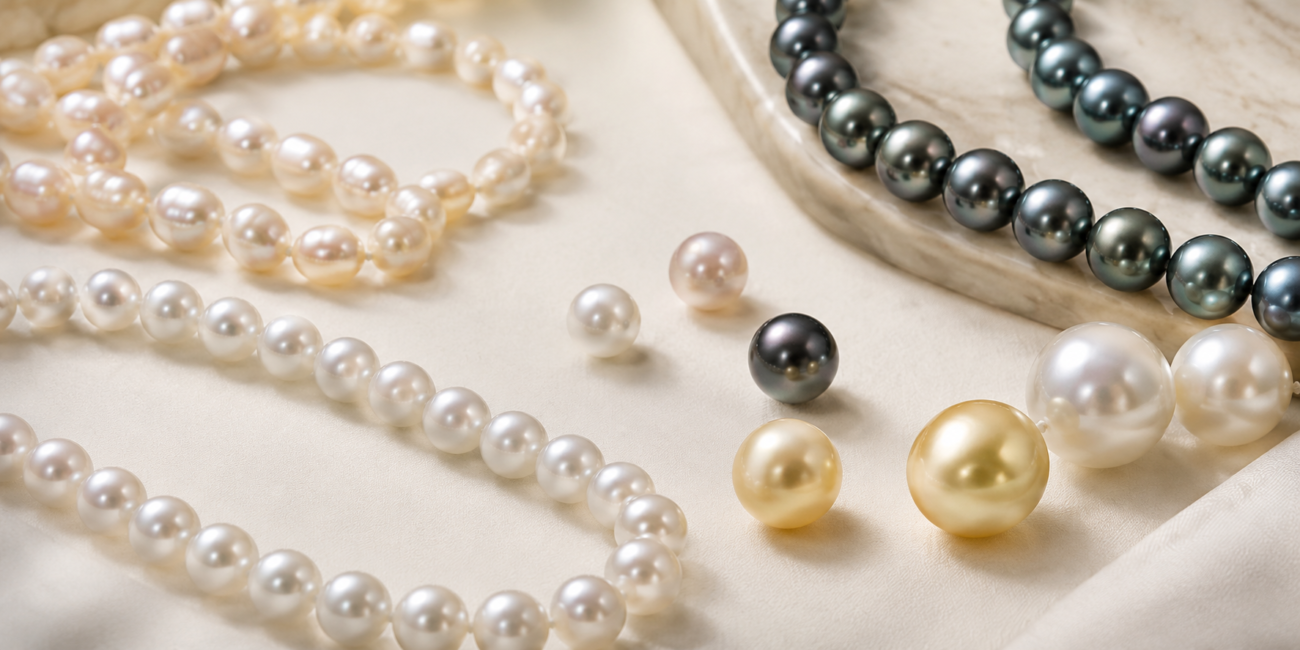
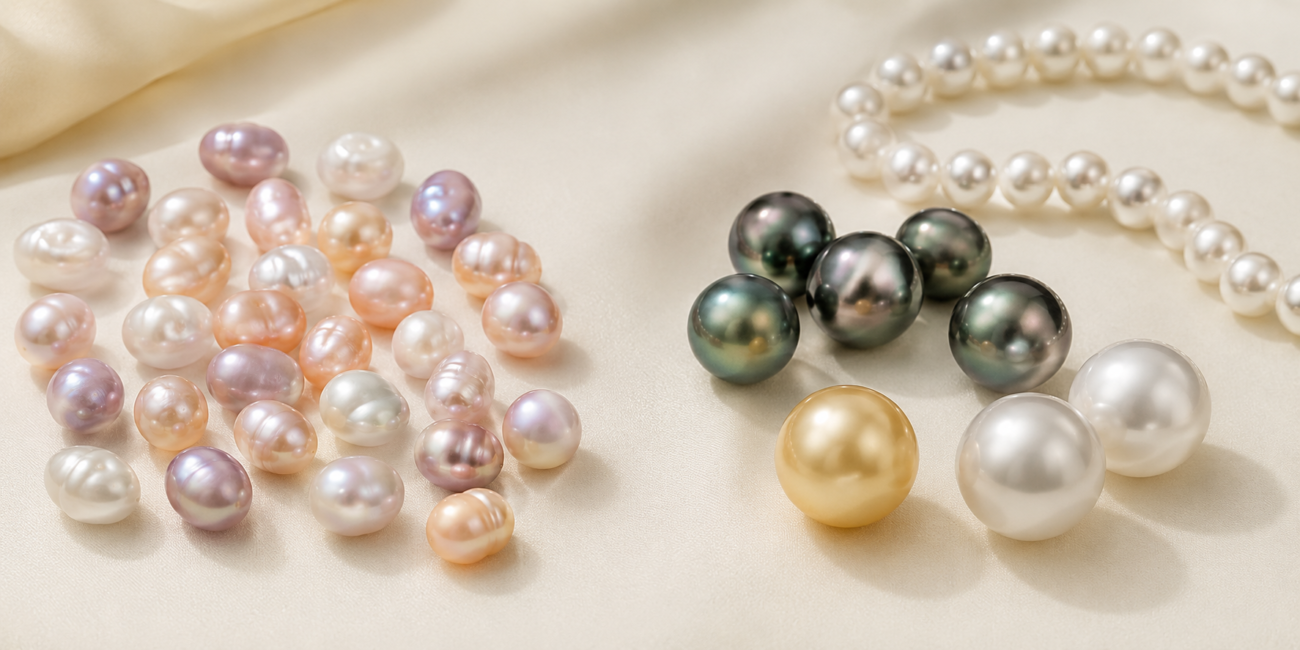
Different pearl types offer different appearances, price ranges, sizes, and wearing effects. There is no single best pearl for everyone. The right choice depends on your personal style, budget, and how you plan to wear the jewelry.
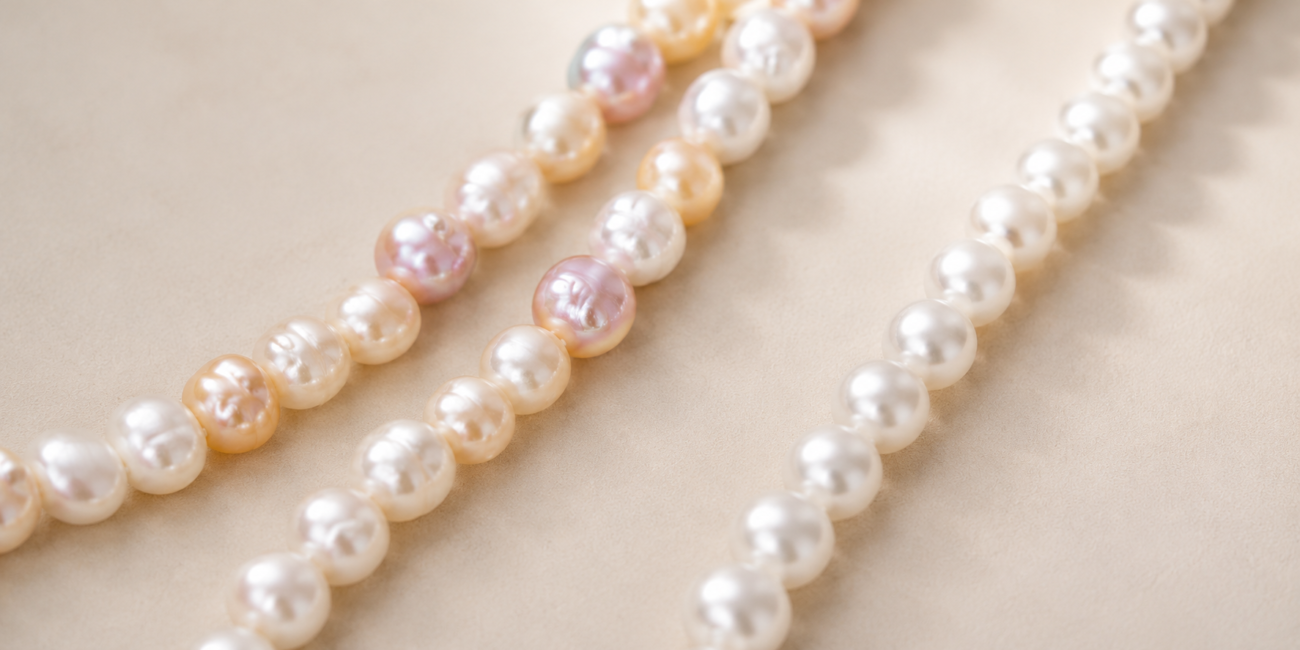
Freshwater cultured pearls are versatile and often ideal for everyday jewelry. They are available in many shapes and soft colors, including white, ivory, peach, pink, and lavender. Their variety makes them suitable for modern designs, meaningful gifts, and relaxed daily styling.
Akoya cultured pearls are known for their classic white or cream appearance, round shapes, and bright luster. They are often chosen for pearl stud earrings, elegant necklaces, weddings, and timeless looks.
Tahitian cultured pearls offer darker colors such as gray, green, blue, silver, and peacock tones. Their distinctive appearance makes them especially suitable for statement jewelry.
South Sea cultured pearls are often larger and may appear in white, silver-white, or golden tones. They are generally associated with a more luxurious visual presence and higher price ranges.
When comparing pearls online, do not rely only on a grading term such as “AAA.” Pearl grading systems are not always used consistently between sellers. Review the full material description, pearl measurements, luster, shape, surface characteristics, and matching instead.
Cultured freshwater pearls are real pearls formed inside living mollusks. If authenticity is one of your main concerns, read our guide explaining whether freshwater pearls are real and how they differ from imitation pearls.
Our freshwater vs. saltwater pearls guide also explains the differences in cultivation, appearance, availability, and price.
2. Compare Pearl Size in Millimeters
Product photographs can make pearls appear larger or smaller depending on camera distance, lighting, cropping, and the size of the model.
A trustworthy product page should state the pearl size in millimeters. For multi-pearl jewelry, the seller may provide a size range because cultured pearls naturally vary slightly.
Smaller pearls often create a subtle and delicate look, while larger pearls produce a stronger visual statement. The best size depends on whether you are choosing earrings, a necklace, a bracelet, or a ring.
Also review the overall dimensions of the jewelry. Necklace length, bracelet circumference, earring drop length, pendant size, and ring adjustability can all affect the final wearing experience.
Our pearl size guide can help you compare how popular millimeter sizes look in earrings, necklaces, gifts, and everyday jewelry.
3. Examine the Luster
Luster describes the brightness and sharpness of light reflected from a pearl’s surface.
Pearls with strong luster often show bright, clear reflections and a sense of depth. Pearls with lower luster may appear softer, duller, or more chalky.
When shopping online, look for photographs taken in more than one lighting condition. Soft studio lighting can make almost any pearl appear attractive, so close-up images and natural-light photographs can be especially useful.
Avoid judging luster only from heavily edited images. Excessive brightness, smoothing, or artificial reflections may hide the pearl’s actual surface appearance.
GIA evaluates natural and cultured pearls using seven pearl value factors: size, shape, color, luster, surface quality, nacre quality, and matching. These factors should be considered together rather than judging a pearl by size or roundness alone.
4. Expect Natural Surface Characteristics
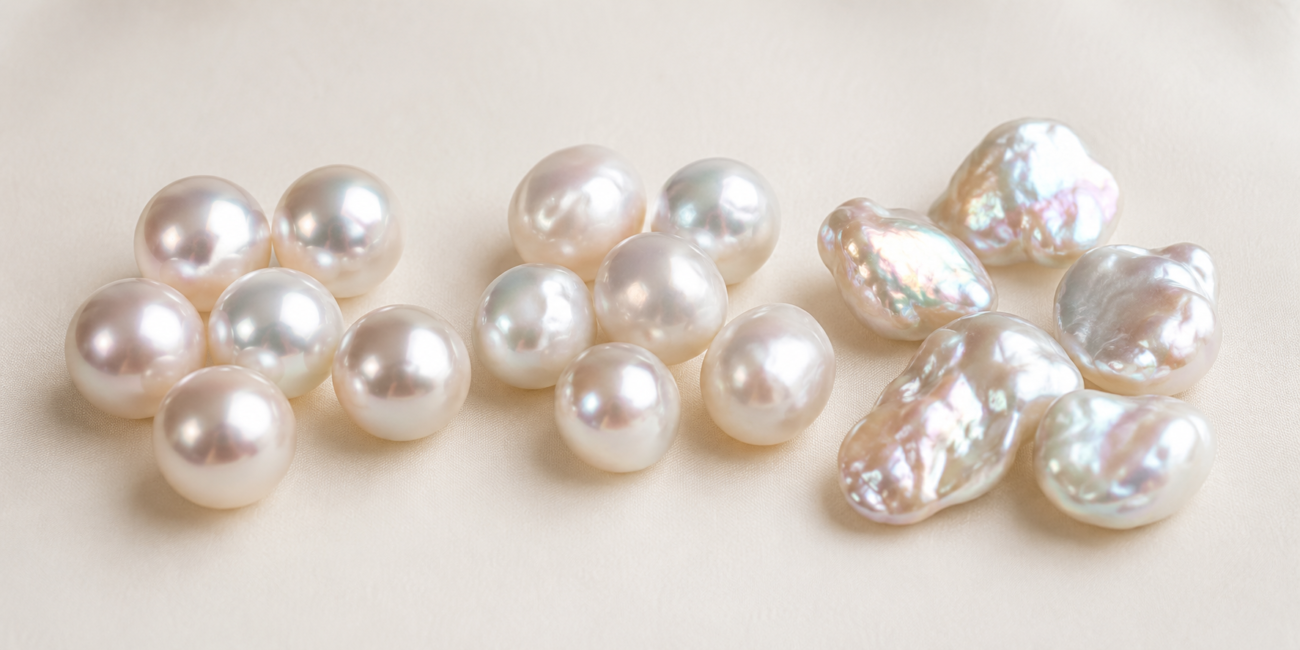
Cultured pearls are organic gems, so small surface characteristics are normal.
Depending on the pearl, you may notice tiny pits, soft wrinkles, shallow ridges, growth marks, or subtle differences in texture. Minor natural characteristics do not automatically mean that a pearl is poor quality.
However, large cracks, severe peeling, deep damage, or obvious discoloration may affect appearance and durability.
A trustworthy seller should not promise that every genuine pearl is completely flawless. Product descriptions and photographs should help customers understand the natural variations they may receive.
Natural differences are especially visible in freshwater and baroque pearls. These variations can be part of the character of the jewelry rather than evidence of careless production.
5. Check the Shape and Matching
Cultured pearls may be round, near-round, oval, button-shaped, drop-shaped, or baroque.
Perfectly round pearls are generally more difficult to produce and may cost more when the other quality factors are similar. Baroque pearls have naturally irregular forms and are valued for their individuality and organic character.
For earrings, necklaces, and bracelets, also consider matching. Matching refers to how well the pearls work together in size, color, shape, luster, and surface appearance.
The pearls do not need to look machine-made, but a carefully designed piece should feel visually balanced. Paired earrings should look harmonious, while a pearl strand should show intentional graduation or consistent matching.
A lower price does not automatically mean a pearl is fake. Our guide to how much real pearls cost explains how pearl type, size, luster, surface, matching, metal materials, and craftsmanship influence the final price.
6. Understand the Metal Materials
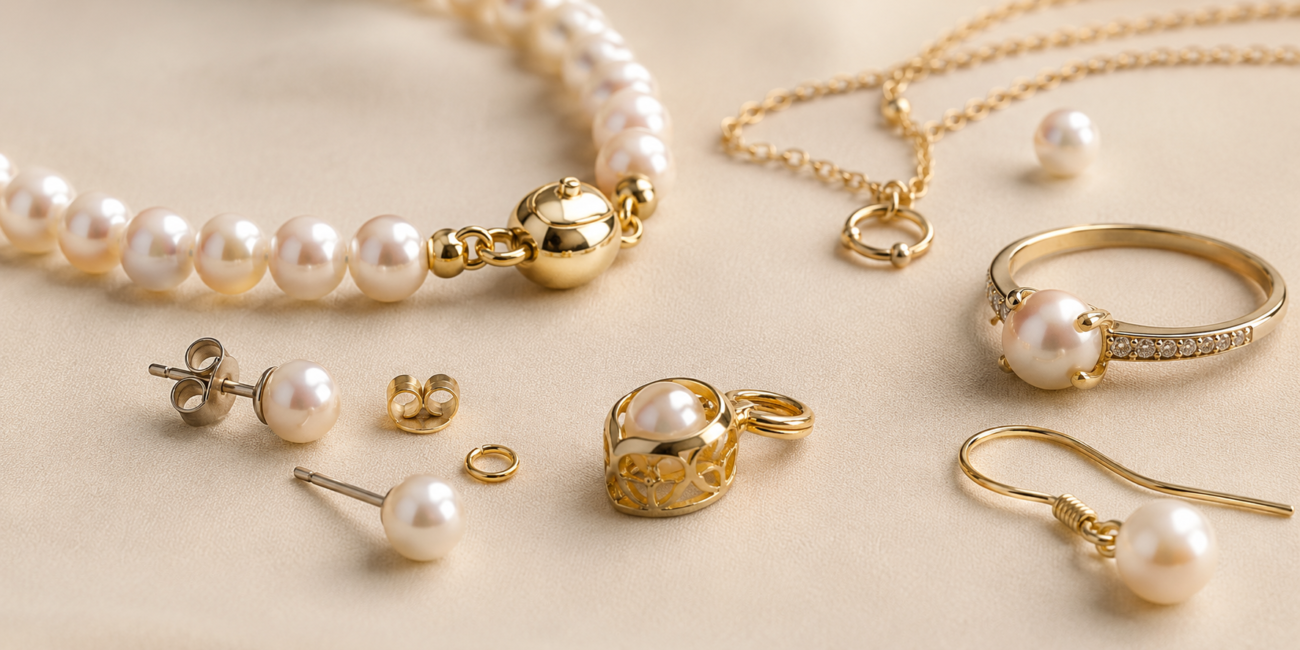
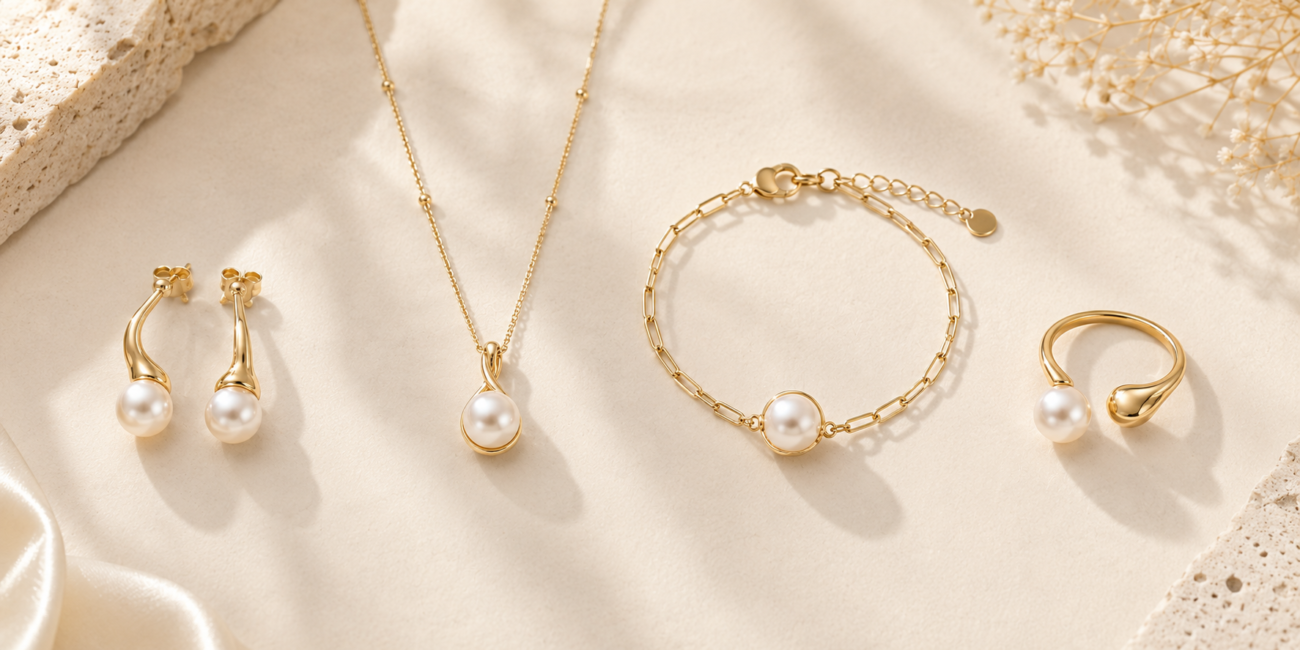
Pearl jewelry is made from more than pearls. Chains, clasps, earring posts, jump rings, settings, hooks, and decorative components all affect comfort, durability, care requirements, and price.
Look for specific metal descriptions such as sterling silver, solid gold, gold-filled, gold-plated brass, gold-plated copper, or stainless steel.
Terms such as “premium metal,” “luxury alloy,” or “gold color” do not clearly explain what the jewelry contains.
Sterling silver may naturally tarnish over time and usually requires gentle polishing. Gold-plated components should be protected from water, perfume, sweat, cosmetics, and repeated friction because the plating may gradually wear.
Also examine close-up photographs of clasps, earring posts, chain connections, and settings. These details can help you understand how the piece is constructed.
The best metal choice depends on your budget, wearing habits, sensitivity concerns, desired color, and how often you plan to wear the jewelry.
7. Look for Realistic Product Photographs
Useful product photographs should help you understand the jewelry’s actual scale, color, shape, and wearing effect.
Look for a combination of:
- Close-up product images
- Full-view jewelry images
- Photographs on a model
- Images showing clasps and metal details
- More than one angle
- Natural-light or realistic lifestyle photographs
- Measurements in the product description
Pearl colors may look slightly different under studio lighting, indoor lighting, and daylight. Screen settings can also affect how white, cream, pink, lavender, silver, or golden tones appear.
Be cautious when every pearl looks perfectly identical, excessively smooth, or unrealistically bright. Heavy image editing may make it difficult to understand the item’s real appearance.
A reliable product page should give you enough visual information to understand the piece without creating unrealistic expectations.
8. Read the Shipping and Return Policies
Before paying, review the seller’s shipping, tracking, return, and quality policies.
Check whether the website clearly explains:
- Where the seller ships
- Estimated processing and delivery times
- Whether tracking is provided
- Whether shipping fees apply
- How long the return window lasts
- Whether returned jewelry must be unworn
- Whether original packaging is required
- Who pays the return shipping cost
- What happens if the item arrives damaged, defective, or incorrect
Clear policies are especially important when purchasing from a newer online jewelry store.
Save your order confirmation, tracking information, and photographs of the package if the jewelry arrives damaged. Contact the seller within the stated policy period.
For U.S. customers, LumiSerene currently provides tracked delivery, a 14-day return window for eligible unworn items in their original condition, and a 30-day quality promise for qualifying damage, defects, or incorrect items.
9. Review the Care Instructions
Pearls and metal components may require different care, so read the care instructions before purchasing.
Pearls should generally be protected from perfume, hairspray, cosmetics, harsh cleaners, prolonged moisture, and repeated friction. Put pearl jewelry on after applying beauty products and remove it before showering, swimming, exercising, or sleeping.
After wearing, gently wipe the pearls and metal components with a clean, soft cloth. Store the jewelry separately in a soft pouch or lined jewelry box to reduce scratching and tangling.
Sterling silver may require occasional gentle polishing, while gold-plated components should be cleaned without abrasive products or excessive rubbing.
Clear care instructions show that the seller understands the materials and helps customers maintain the jewelry after it arrives.
How to Care for Pearl Jewelry After Buying It Online
Choosing carefully is only the first step. Thoughtful care helps preserve both the pearls and the metal components over time.
How to Care for Pearls
Pearls are organic gems, so they require gentler care than many harder jewelry materials.
A useful rule is to make pearls the last thing you put on and the first thing you take off.
Apply skincare, makeup, perfume, and hairspray before wearing your pearl jewelry. Allow these products to dry before putting the pearls on. This helps reduce contact with substances that may dull the pearl surface.
After wearing, gently wipe the pearls with a clean, soft cloth to remove sweat, oil, cosmetics, and dust.
Avoid:
- Spraying perfume directly onto pearls
- Allowing hairspray or cosmetics to coat the pearls
- Ultrasonic or steam cleaners
- Harsh detergents
- Alcohol-based cleaners
- Rough brushes
- Long soaking in water
- Wearing pearls while bathing, swimming, exercising, or sleeping
For occasional cleaning, use a soft cloth lightly dampened with lukewarm water. If needed, use only a very small amount of mild soap, then wipe again with a clean damp cloth and dry gently. Do not scrub.
How to Care for Sterling Silver Components
Sterling silver may naturally tarnish over time when exposed to air, humidity, sweat, cosmetics, or certain chemicals. This is a normal material reaction and does not automatically indicate poor quality.
To care for sterling silver:
- Keep it in a sealed pouch or lined jewelry box
- Avoid humid environments
- Wipe it after wearing
- Use a silver polishing cloth only on the metal areas
- Avoid rubbing the pearl surface with the polishing cloth
- Keep it away from perfume, sweat, and household cleaners
Silver polishing cloths may contain polishing compounds suitable for silver but not ideal for delicate pearl surfaces. When polishing silver close to a pearl, work carefully and avoid direct contact with the pearl.
How to Care for Gold-Plated Components
Gold-plated jewelry needs gentle handling because the surface layer can gradually wear with friction and repeated exposure to moisture or chemicals.
To help preserve gold-plated components:
- Avoid water, sweat, perfume, and cosmetics
- Do not wear the jewelry while bathing, swimming, or exercising
- Wipe gently with a soft, dry cloth after wearing
- Store each piece separately to reduce friction
- Do not use silver polishing cloths or abrasive cleaners
- Avoid pulling or bending delicate chains, posts, and hooks
Because plated surfaces are more sensitive to rubbing, separate storage can help reduce scratching and color fading.
How to Store Pearl Jewelry
Good storage protects both the pearls and the metal components.
Store each piece separately so the pearls do not rub against harder gemstones, sharp metal edges, or other jewelry. A soft pouch, lined jewelry box, or individual compartment is ideal.
Avoid storing pearls in extremely dry conditions for long periods because pearls naturally contain a small amount of moisture. At the same time, avoid damp places such as bathrooms, as moisture may speed up metal tarnishing.
For necklaces and bracelets, lay them flat when possible to reduce tension on stringing, chains, and clasps. Keep earring pairs together and avoid bending posts or hooks.
Check Your Jewelry Occasionally
Pearl jewelry should be checked occasionally, especially when worn often.
Look at:
- Clasps
- Jump rings
- Earring hooks
- Earring posts
- Chain links
- Pearl settings
- Stringing and knots on pearl strands
If something feels loose or unstable, stop wearing the piece until it has been repaired. This is especially important for pearl strands and dangling earrings, where small connectors carry movement and weight.
Simple Styling After Care
Once your jewelry is clean and properly stored, styling pearl jewelry can be simple and natural.
Freshwater pearl studs and small pendants are easy choices for everyday wear. Baroque pearl pieces add individuality to simple outfits, while a classic pearl necklace can complement a dress, blouse, knitwear, or workwear look.
Gold-toned details often pair naturally with warm neutrals, while silver-toned components can feel clean and minimal.
Our guide to styling pearl jewelry offers more ideas for casual outfits, workwear, gifts, and meaningful occasions.
What LumiSerene Shows Before You Buy
At LumiSerene, we believe customers should understand what they are choosing before they place an order.
Our product pages identify cultured freshwater pearls, relevant dimensions, metal materials, natural variations, and care information whenever applicable.
Each piece is carefully checked for pearl appearance, setting condition, clasp or component function, and overall presentation before packing.
For U.S. customers, we currently provide tracked delivery, a 30-day return window for eligible unworn items in their original condition, and a 30-day quality promise for qualifying damage, defects, or incorrect items.
Pearls are naturally individual, so small differences in shape, tone, and surface may occur. We present these variations as part of the pearl’s organic character rather than promising machine-made perfection.

CTA BUTTON:
EXPLORE FRESHWATER PEARL JEWELRY
Frequently Asked Questions About Buying Pearl Jewelry Online
How can I tell whether pearl jewelry online is real?
Check whether the seller specifically identifies the pearls as cultured, natural, or imitation. Look for pearl size, material details, realistic photographs, natural variation information, and clear customer policies. Valuable or uncertain pearls may require professional laboratory identification.
What should a pearl jewelry product description include?
A useful description should include the pearl type, approximate size, shape, color, metal materials, jewelry dimensions, natural variations, care instructions, and relevant shipping and return information.
Are cultured freshwater pearls real?
Yes. Cultured freshwater pearls are real pearls formed inside living mollusks. People initiate the cultivation process, but the mollusk forms the pearl and deposits its nacre.
Is it safe to buy pearl jewelry online?
It can be safe when the seller provides transparent material descriptions, secure payment options, tracked shipping, contact information, realistic photographs, and understandable return and quality policies.
What pearl size is best for everyday jewelry?
Smaller and medium-sized pearls are often comfortable and versatile for everyday wear, while larger pearls create a stronger visual statement. The best size depends on the jewelry type, personal style, and desired wearing effect.
Final Thoughts
Learning how to buy pearl jewelry online becomes easier when you know which details matter.
Pearl type, size, shape, luster, surface characteristics, matching, metal materials, realistic photographs, and seller policies all help you understand a piece before purchasing.
Care information matters too. Pearls need gentle handling, while sterling silver and gold-plated components may require different cleaning and storage methods.
The best pearl jewelry is not necessarily the largest or most expensive piece. It is the one that fits your style, budget, lifestyle, and personal meaning—and comes from a seller who clearly explains what you are choosing.
With transparent information and thoughtful care, pearl jewelry can become part of your everyday style, meaningful gifts, special occasions, and personal story.

6 thoughts on “How to Buy Pearl Jewelry Online: A Practical Selection and Care Guide”