

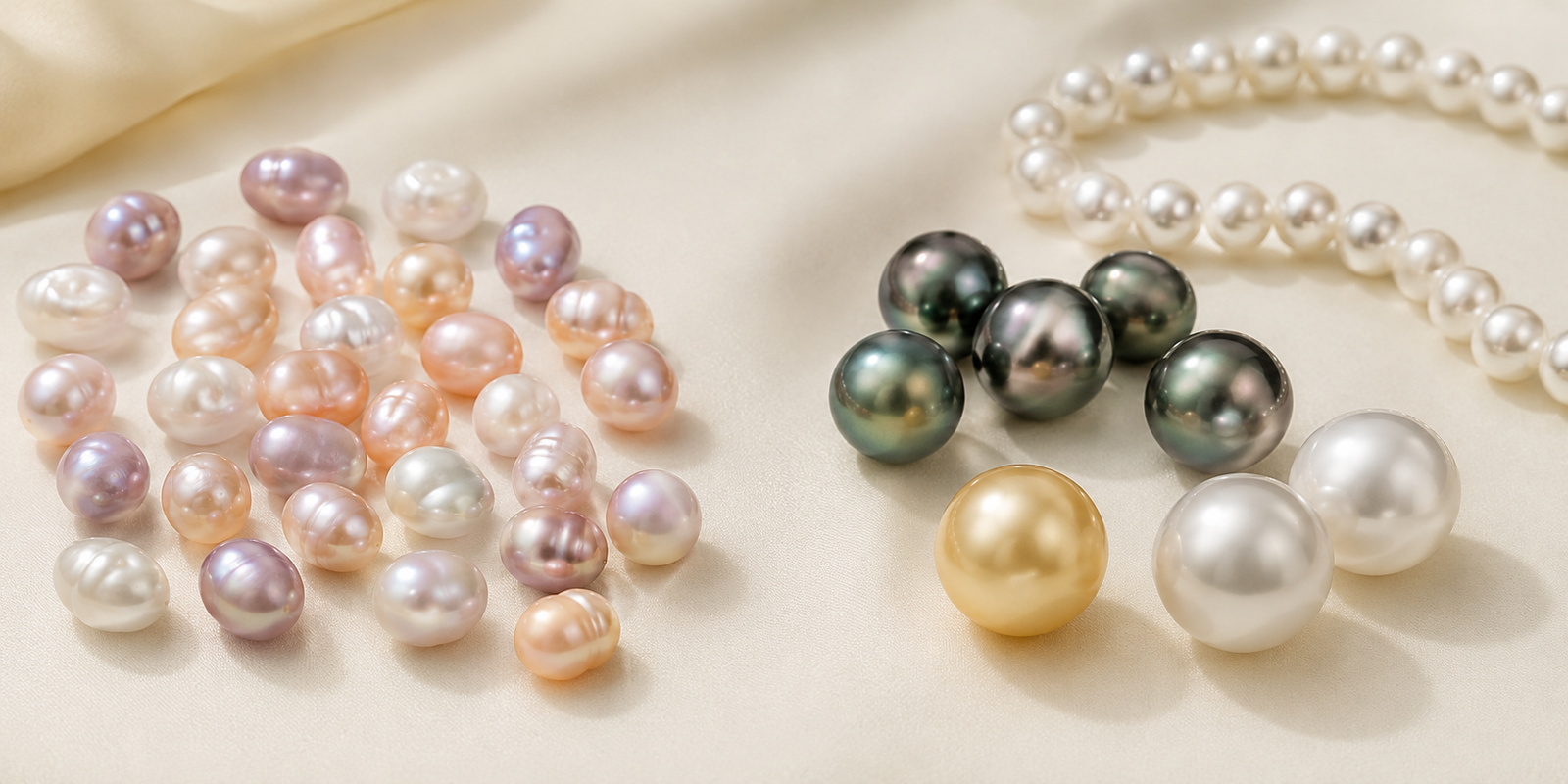
Pearls have a soft, luminous beauty that feels timeless. But when choosing pearl jewelry, many shoppers wonder about the difference between freshwater vs saltwater pearls.
Are cultured pearls real pearls?
Are freshwater pearls lower quality than saltwater pearls?
Does a natural surface mark mean a pearl is damaged?
These questions are common because pearls are organic gemstones formed inside living mollusks. Each pearl develops its own unique characteristics, including size, shape, color, luster, and surface appearance.
Understanding the differences between freshwater and saltwater pearls can help you choose jewelry with confidence instead of relying only on unclear labels or overly edited photographs.
Are Cultured Pearls Real Pearls?
Yes. Cultured pearls are real pearls.The FTC recommends that pearl sellers clearly distinguish between natural pearls, cultured pearls, and imitation pearls so consumers understand what they are purchasing.
A cultured pearl forms inside a living mollusk, such as a freshwater mussel or a saltwater oyster, with human assistance at the beginning of the cultivation process. As the pearl develops, the mollusk forms layers of nacre, the luminous material responsible for a pearl’s glow.
Cultured pearls are different from natural pearls. Natural pearls form without human intervention and are exceptionally rare in modern jewelry. Most genuine pearl jewelry available today is made with cultured pearls.
Cultured pearls are also very different from imitation pearls, which may be made from glass, plastic, shell or other coated materials designed to resemble pearls.
When shopping online, a trustworthy product description should clearly tell you whether a piece contains freshwater cultured pearls, Akoya cultured pearls, Tahitian cultured pearls, South Sea cultured pearls or imitation pearls.
Freshwater vs. Saltwater Pearls: What Is the Difference?
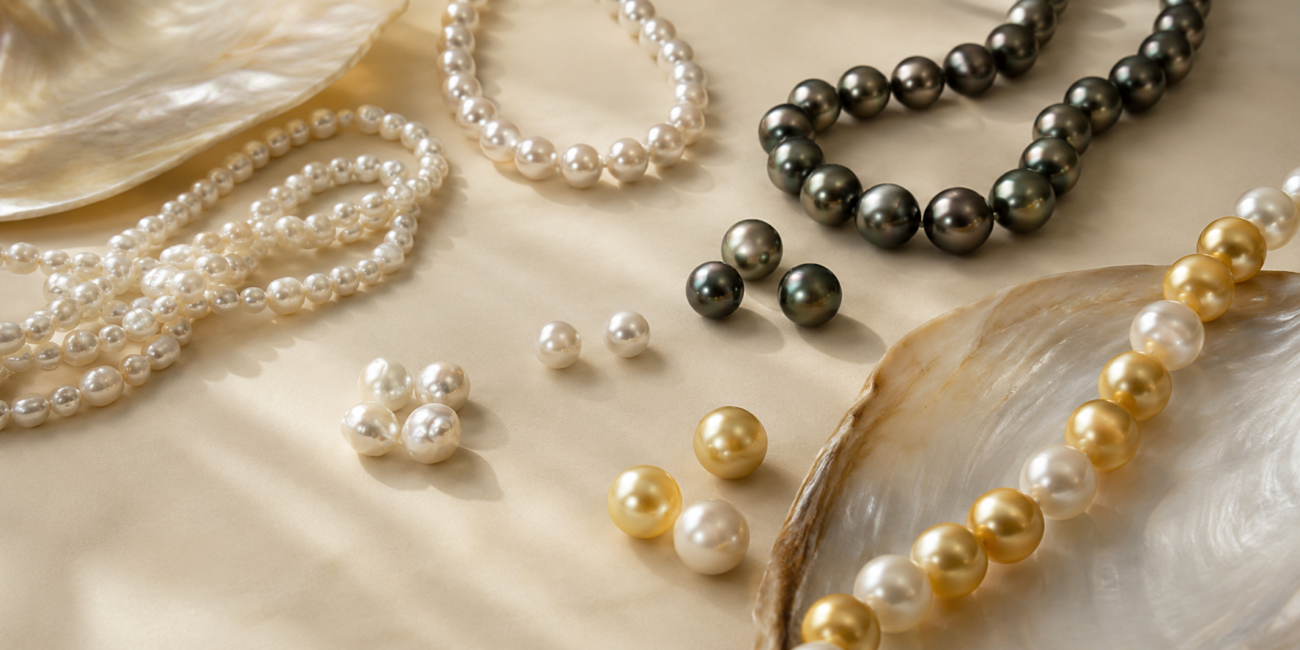
Freshwater and saltwater pearls are both genuine cultured pearls when correctly described. Their main differences come from where they are cultivated, the mollusks that form them, their typical appearance and their price range.
| Pearl Type | Where It Forms | Typical Look | Often Chosen For | Price Level |
|---|---|---|---|---|
| Freshwater | Freshwater mussels | White, ivory, pink, peach, lavender | Everyday jewelry, gifts | Accessible |
| Akoya | Saltwater oysters | Classic white, cream, bright luster | Timeless jewelry | Mid to high |
| Tahitian | Saltwater oysters | Dark gray, green, peacock tones | Statement jewelry | Higher |
| South Sea | Saltwater oysters | Large white or golden pearls | Luxury jewelry | Highest |
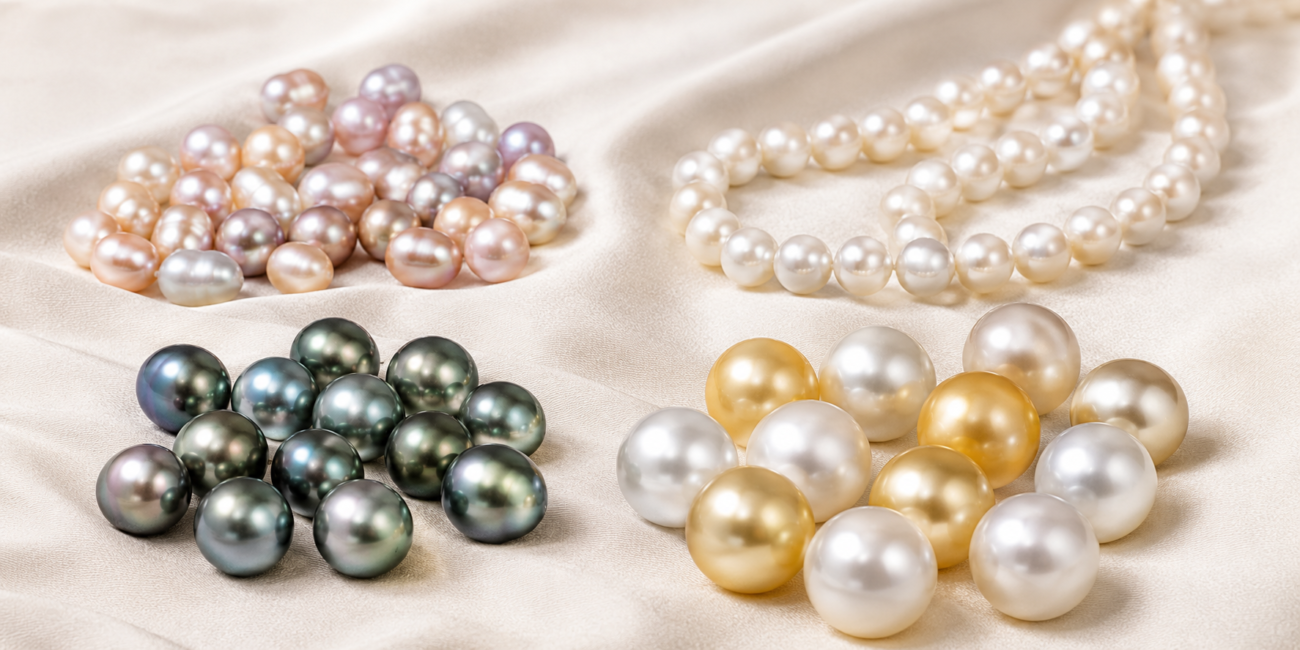
There is no single pearl type that is right for everyone. The best choice depends on the look you love, how you plan to wear it and the budget that feels comfortable for you.
Freshwater Pearls: Versatile, Genuine and Beautifully Individual
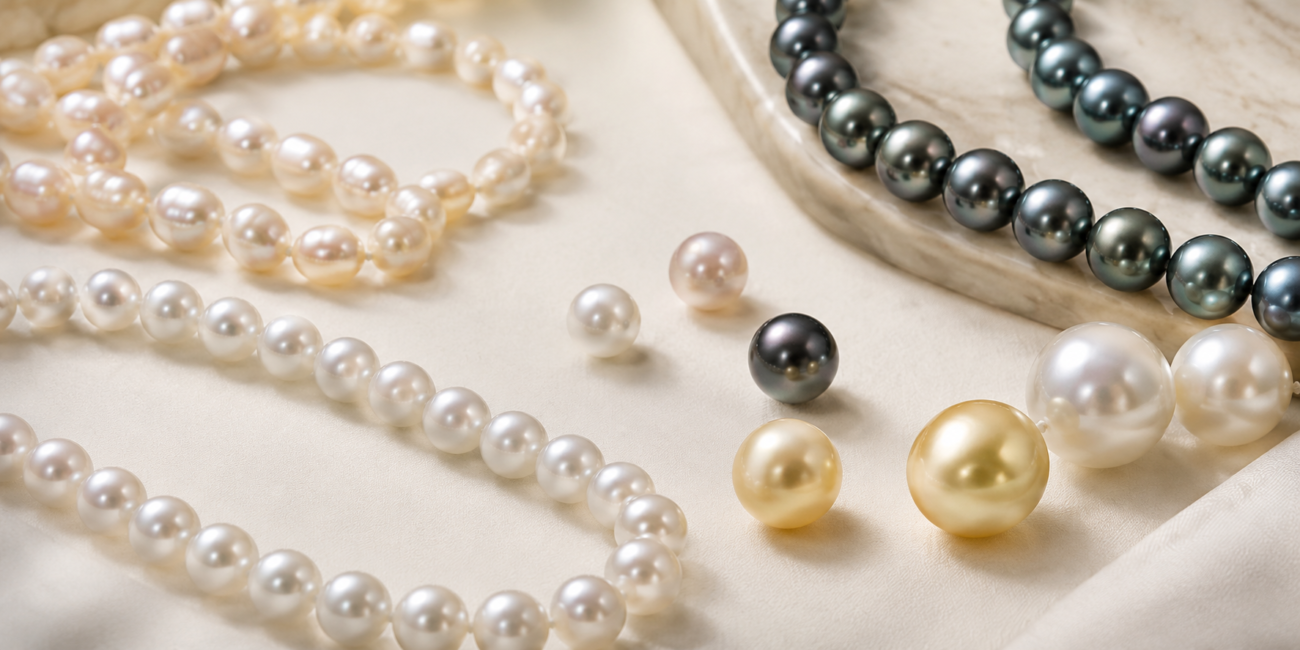
Freshwater cultured pearls are admired for their variety. They may be round, near-round, oval, button, drop-shaped or baroque. Their colors may include classic white and ivory as well as soft pink, peach and lavender tones.
Because freshwater pearls are available in a wide range of shapes and price points, they are especially popular for:
- Everyday necklaces and bracelets
- Pearl stud or drop earrings
- Bridal and bridesmaid jewelry
- Layered styling pieces
- Artistic baroque designs
- Meaningful gifts at approachable prices
A common misunderstanding is that freshwater pearls are automatically “less beautiful” than saltwater pearls. In reality, quality matters more than category alone.
A freshwater pearl with beautiful luster and a pleasing surface can be more attractive than a saltwater pearl with dull appearance or distracting markings.
Akoya Pearls: The Classic Pearl Look
Akoya cultured pearls are often what people picture when imagining a traditional pearl necklace. They are usually white or cream, sometimes with soft rose or silver overtones, and are known for their bright, refined luster.
Akoya pearls are especially popular for:
- Classic pearl stud earrings
- Elegant single-strand necklaces
- Wedding jewelry
- Minimal, timeless designs
For shoppers who love a polished and traditional pearl appearance, Akoya pearls are a beautiful choice.
Tahitian Pearls: Dark, Distinctive and Expressive
Tahitian cultured pearls are known for their darker body colors and layered overtones. Although often called “black pearls,” they may show shades of charcoal, silver, green, blue, aubergine or peacock.
Their unusual coloring gives them a modern, expressive quality that feels different from the traditional white pearl look.
Tahitian pearls are often chosen by shoppers who prefer jewelry with individuality and depth of color.
South Sea Pearls: Larger Pearls with Soft Radiance
South Sea cultured pearls are known for their larger sizes and elegant appearance. They are typically found in white, silver-white or golden shades.
Rather than the sharper shine often associated with Akoya pearls, South Sea pearls are admired for a softer, satiny radiance.
Because of their size, cultivation requirements and visual presence, South Sea pearls are frequently associated with fine jewelry and higher price points.
Are Saltwater Pearls Always Better Than Freshwater Pearls?
No. Saltwater pearls are not automatically better; they are simply different.
Saltwater pearls may be rarer and more expensive, particularly in larger sizes or exceptional quality. But the beauty of any pearl depends on more than its origin.
Important qualities include:
- Luster
- Surface appearance
- Shape
- Color
- Size
- Nacre quality
- Matching, when several pearls are used together
If you want versatile pearl jewelry for everyday wear, freshwater pearls may be ideal. If you prefer classic white refinement, Akoya may suit you. If you love darker colors or larger statement pearls, Tahitian or South Sea pearls may be more appealing.
Which Pearl Type Is Best for Everyday Jewelry?
For many shoppers, freshwater pearls are an excellent choice for everyday jewelry because they offer beautiful luster, natural variety, comfortable designs, and accessible price points.
Akoya pearls are ideal for those who prefer a classic and refined pearl appearance.
Tahitian and South Sea pearls are better suited for shoppers looking for larger sizes, distinctive colors, or statement pieces.
The best pearl is not always the rarest or most expensive. It is the one that matches your lifestyle, personal style, and the occasions when you plan to wear it.
Round, Near-Round and Baroque Pearls
Pearls are available in many shapes, and shape influences both style and price.
Pearl size can also significantly change the overall look of jewelry. Our pearl size guide explains how different millimeter sizes appear in earrings, necklaces, and everyday styles.
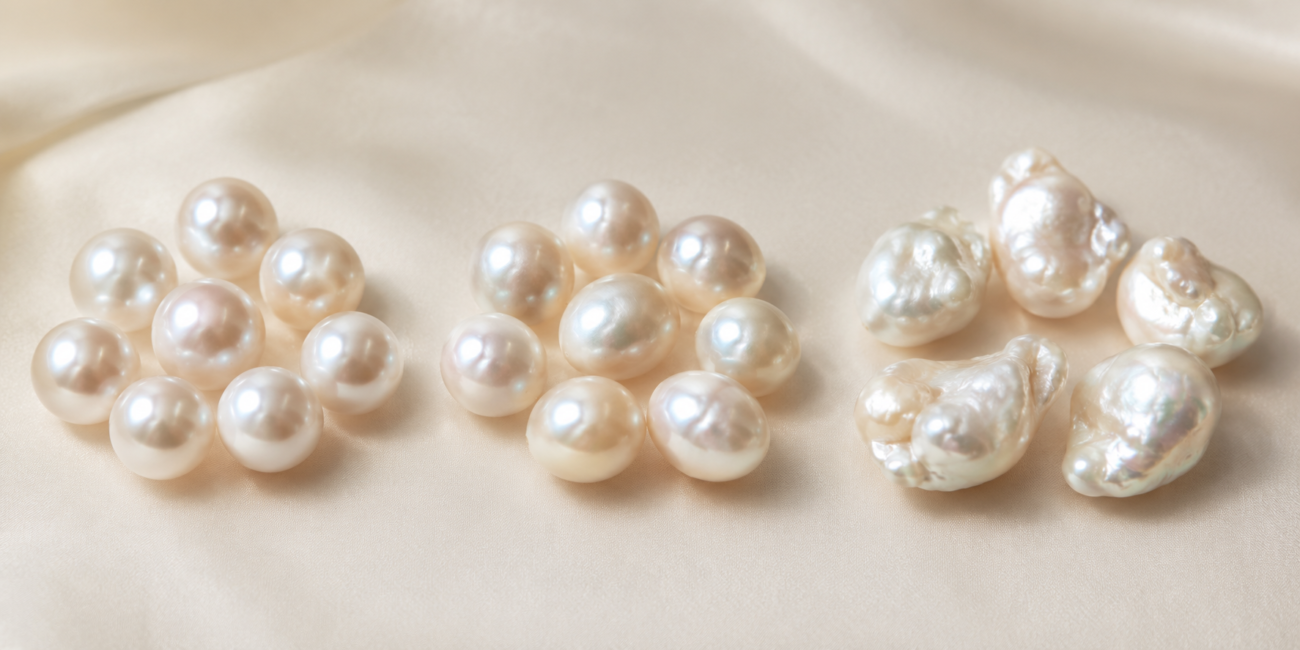
Round pearls offer a classic, symmetrical appearance and are traditionally valued for their rarity.
Near-round pearls look beautifully rounded when worn, with only slight natural variation visible upon close inspection.
Oval and drop pearls create graceful silhouettes that work especially well in earrings and pendants.
Button pearls have a slightly flattened shape that sits comfortably against the ear.
Baroque pearls have irregular, organic forms, making each piece naturally individual.
Are Baroque Pearls Lower Quality?
No. Baroque describes shape, not overall beauty.
A baroque pearl can still have beautiful luster, attractive color and a pleasing surface. Its irregular shape gives it a unique, artistic character rather than making it defective.
Many modern pearl jewelry designs feature baroque pearls because they feel relaxed, expressive and one of a kind.
A round pearl offers classic symmetry. A baroque pearl offers individuality. Neither style is automatically better than the other.
What Do Minor Blemishes Mean?
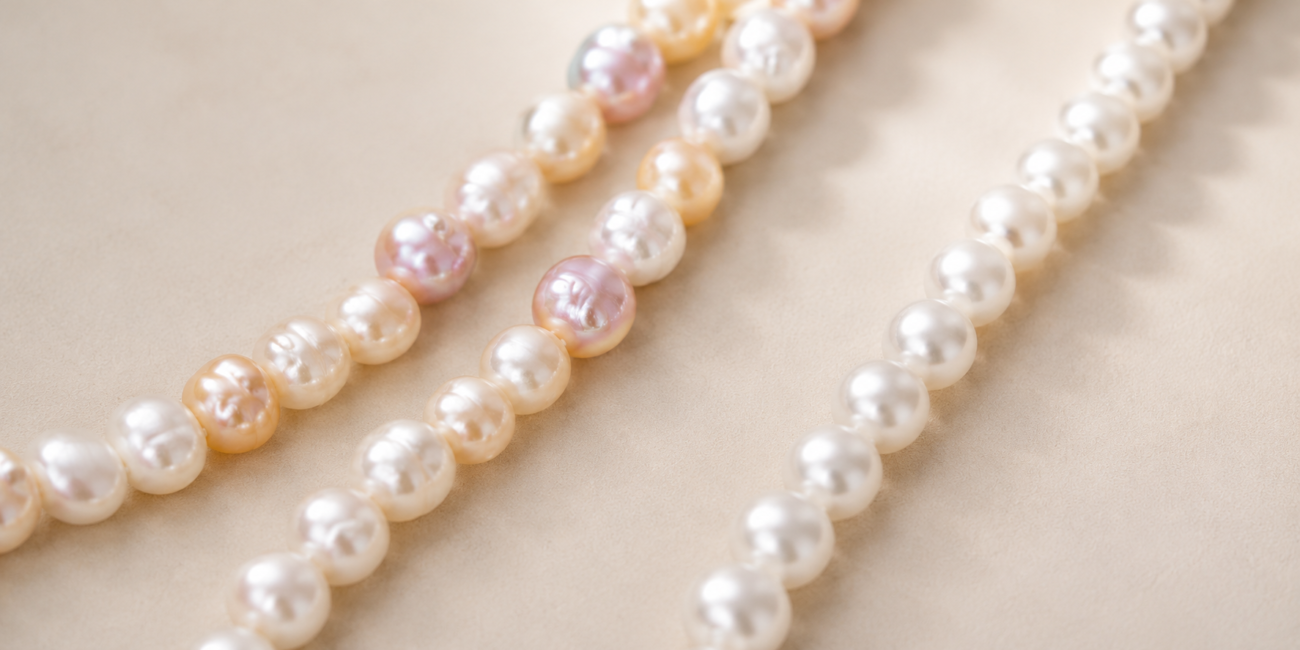
Real pearls often show small surface characteristics because they develop inside living mollusks.
These may include:
- Tiny pinpricks
- Fine ridges
- Small dimples
- Soft growth lines
- Slight variations in texture
These features are not automatically damage.
A small natural surface mark is very different from cracking, peeling, chipping or deep damage that may affect durability or appearance.
For many shoppers, lightly blemished pearls with strong luster offer a beautiful balance of authenticity, beauty and value.
Understanding Pearl Surface Descriptions
Descriptions vary between sellers, so terms such as “micro blemished” or “very clean surface” should be understood as shopping guidance rather than a universal grading system.
Very Clean Surface
Little to no visible surface marking when viewed without magnification.
Lightly Blemished or Micro Blemished
A few small natural surface marks may be visible at close range, while the overall pearl still looks beautiful when worn.
Moderately Blemished
Surface markings are more noticeable but may still be balanced by attractive luster, shape or color.
Heavily Blemished
Surface irregularities are clearly visible and have a stronger impact on overall appearance.
How Pearl Quality Is Evaluated
Pearl quality is influenced by several characteristics rather than a single grade label.
GIA evaluates pearls using seven value factors: size, shape, color, luster, surface quality, nacre quality, and matching.
These factors work together. A smaller pearl with excellent luster and surface quality may be more attractive than a larger pearl with weaker appearance.
What Do Pearl Grades Such as AAA Mean?
You may see pearl jewelry described as AAA, AAAA, premium quality or gem quality. These labels can be helpful within a particular seller’s collection, but they are not always used consistently across different brands.
This means one seller’s “AAA” may not be exactly the same as another seller’s “AAA.”
Rather than relying on a single grade label, look for product information that clearly explains:
- Pearl type
- Cultured or imitation status
- Approximate size
- Shape
- Color
- Luster
- Surface description
- Matching quality for pairs or strands
- Any relevant known treatment information
For a complete checklist before purchasing, read our guide on how to buy pearl jewelry online and what details to compare before placing an order.
The more transparent the description, the easier it is to understand what you are purchasing.
The Most Important Thing to Remember
A beautiful pearl does not need to be perfectly round or entirely free from natural surface character.
Freshwater cultured pearls are genuine pearls.
Saltwater pearls are not automatically the right choice for every shopper.
Baroque pearls are distinctive rather than defective.
Minor surface marks are normal in genuine pearl jewelry.
And a pearl’s beauty comes from the balance of luster, color, shape, surface and design.
The right pearl is the one that suits your style, fits your budget and makes you feel confident whenever you wear it.

Once you choose the right pearl type, styling can make your jewelry even more meaningful. Explore our guide on how to style pearl jewelry for everyday outfits, gifts, and special moments.
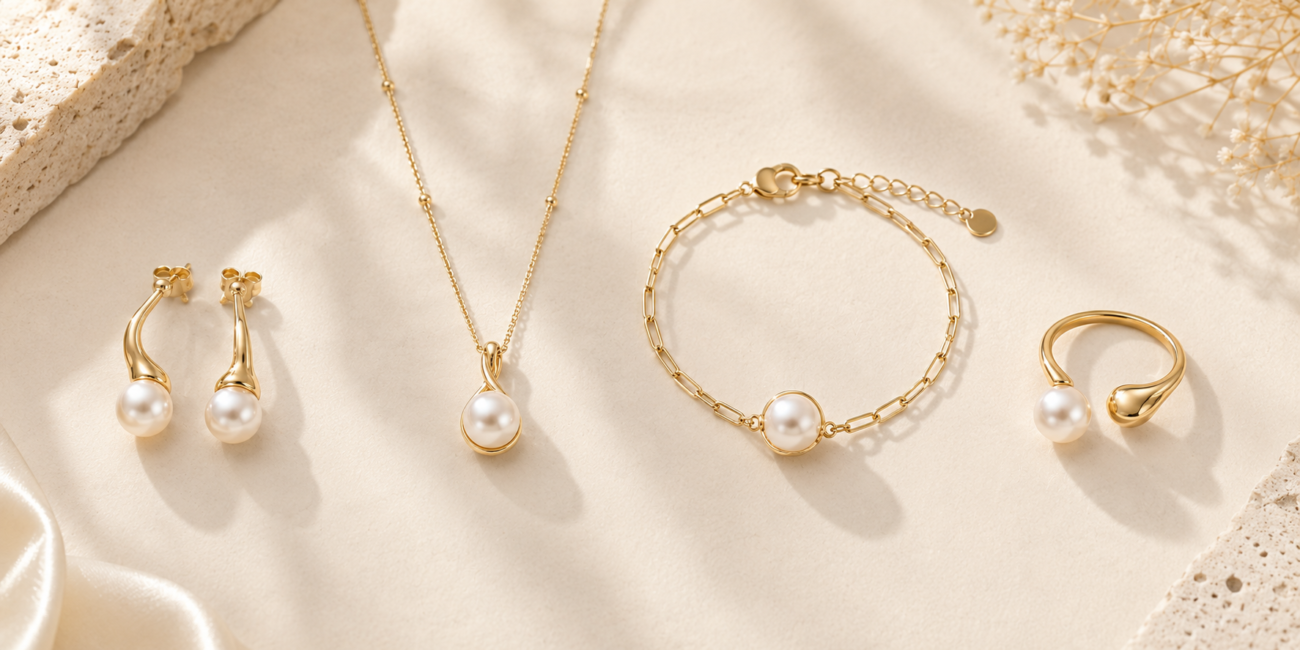
If you are looking for freshwater pearl jewelry designed for everyday wear, explore our LumiSerene collections featuring natural variations, thoughtful designs, and pieces created for meaningful moments.
Wondering What Different Pearls Should Cost?
Understanding pearl types and quality is the first step. The next question many shoppers ask is simple: how much should real pearl jewelry actually cost?
In our next guide, we explain what influences pearl pricing, how freshwater pearls compare with Akoya, Tahitian and South Sea pearls, and when paying more may genuinely reflect better materials or craftsmanship.
3 thoughts on “Freshwater vs. Saltwater Pearls: How to Choose the Right Pearl Jewelry”