

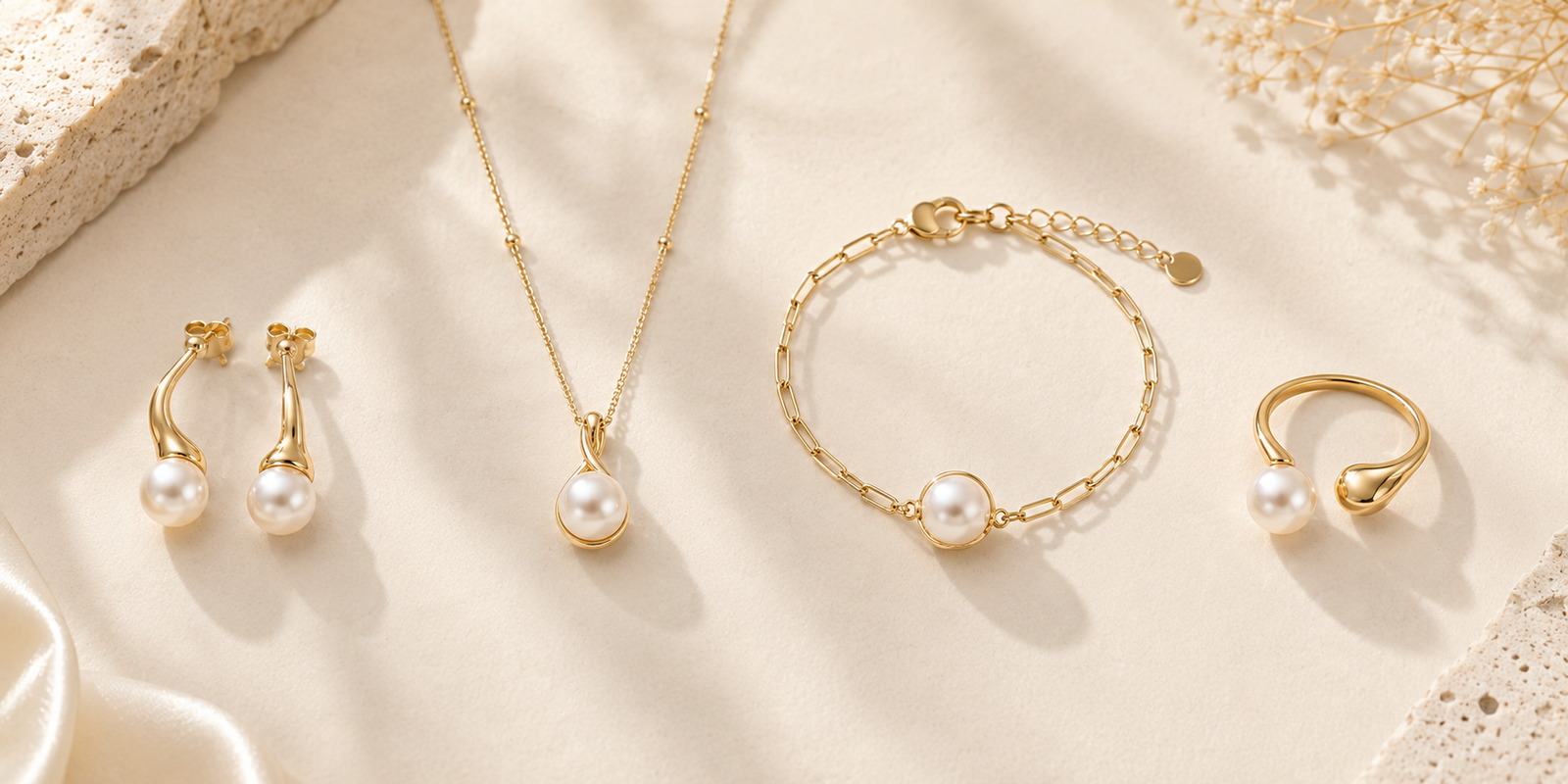
Pearl size can completely change how a piece of jewelry looks and feels.
This pearl size guide compares popular millimeter sizes for earrings, necklaces, bracelets, rings, everyday wear, and meaningful gifts.
Smaller pearls often feel delicate, subtle, and easy to wear. Larger pearls create a more noticeable and expressive look. Neither option is automatically better—the right size depends on your personal style, the jewelry design, and how you want the piece to feel when worn.
Whether you are choosing your first pearl piece, shopping for someone else, or trying to understand the measurements shown on a product page, this guide will help you compare pearl sizes with greater confidence.
How Is Pearl Size Measured?
Pearls are generally measured in millimeters, written as mm.
For a round or near-round pearl, the measurement usually refers to its diameter. A pearl listed as 7 mm is approximately 7 millimeters across its widest point.
For oval, drop-shaped, baroque, or irregular pearls, a product page may list two measurements, such as:
8 × 10 mmThis means the pearl is approximately 8 mm across and 10 mm long.
Because cultured freshwater pearls are naturally individual, small differences in size, shape, color, and surface texture are normal. Even pearls used within the same design may not be perfectly identical.
Measurements are especially important when shopping online. Close-up photographs can make a pearl look much larger than it will appear when worn, so always compare the listed millimeter size with the complete jewelry dimensions and model images.
GIA’s pearl buyer’s guide explains that pearl size should be considered together with shape, color, luster, surface quality, nacre quality, and matching rather than judged in isolation.
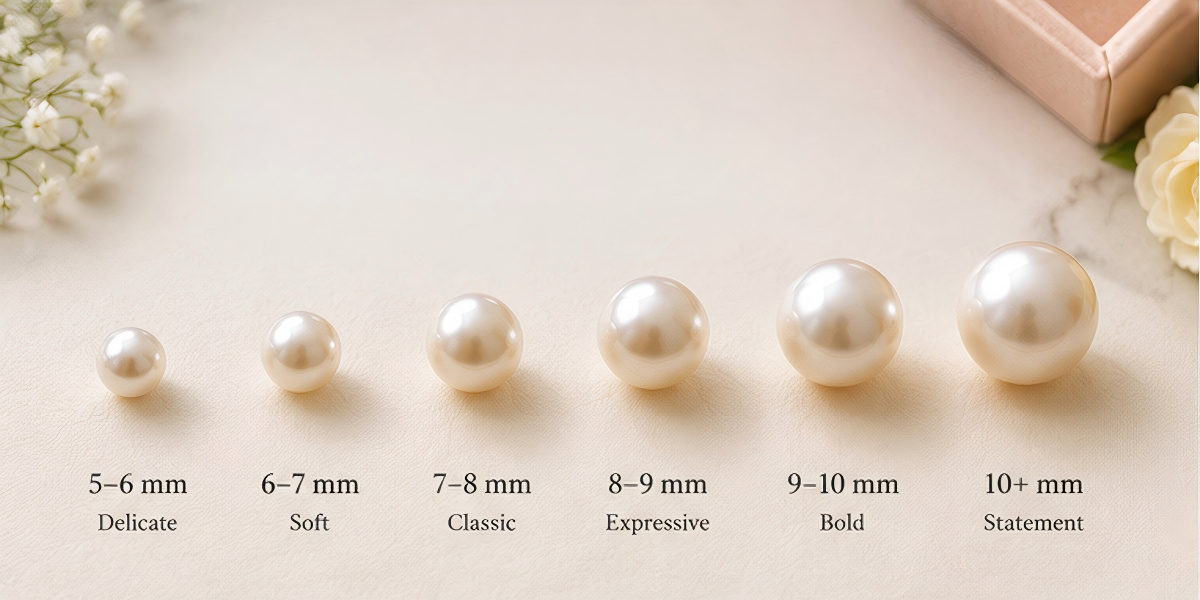
Pearl Size Guide: Common Sizes at a Glance
A difference of one or two millimeters may sound small, but it can noticeably change the overall appearance of pearl jewelry.
| Pearl size | Overall appearance | Common uses |
|---|---|---|
| 5–6 mm | Delicate and subtle | Minimal earrings, small accents, layering |
| 6–7 mm | Soft and versatile | Everyday earrings, pendants, bracelets |
| 7–8 mm | Classic and noticeable | Studs, necklaces, rings, meaningful gifts |
| 8–9 mm | More expressive | Drop earrings, visible pendants, occasions |
| 9–10 mm | Bold and refined | Statement earrings, larger pendants |
| Over 10 mm | Artistic and dramatic | Baroque designs and statement jewelry |
These descriptions are general visual references rather than strict rules. Pearl shape, jewelry setting, surrounding stones, chain thickness, and wearing position can all change how large a pearl appears.
5–6 mm Pearls: Delicate and Minimal
Pearls around 5–6 mm usually create a subtle and lightweight appearance.
They can work especially well for:
- Minimal everyday jewelry
- Small pearl earrings
- Layered necklaces
- Delicate accent pearls
- Understated or youthful styles
This size is a good choice for someone who prefers jewelry that feels quiet and easy rather than bold.
Smaller pearls also blend naturally with fine chains, colored beads, crystals, and modern metal details. They can be worn alone or layered without making an outfit feel overly formal.
6–7 mm Pearls: Soft and Versatile
Pearls around 6–7 mm offer a comfortable balance between delicate and noticeable.
They are often suitable for:
- Everyday pearl earrings
- Simple pendant necklaces
- Lightweight bracelets
- Modern pearl rings
- First-time pearl buyers
This range can feel refined without appearing overly formal. It is easy to wear with casual shirts, dresses, office outfits, and weekend clothing.
For many shoppers, 6–7 mm pearls are a comfortable place to begin because they offer visible luster while remaining subtle enough for frequent wear.
7–8 mm Pearls: Classic and Wearable
Pearls around 7–8 mm are noticeable enough to display their luster clearly while still feeling practical for everyday life.
They work well for:
- Pearl stud earrings
- Pendant necklaces
- Classic pearl strands
- Pearl rings
- Meaningful gifts
This size range can feel polished and timeless, but the overall impression still depends on the design.
A 7–8 mm pearl in a clean, modern setting may look very different from the same pearl size used in a traditional full-strand necklace. Metal details, surrounding stones, and the amount of open space around the pearl can all affect the final look.
8–9 mm Pearls: Visible and Expressive
Pearls around 8–9 mm create a stronger visual presence.
They may be ideal for someone who wants:
- More noticeable earrings
- A pendant that stands out
- A special-occasion piece
- A birthday or anniversary gift
- Jewelry that feels elegant but still wearable
Larger freshwater pearls may also show more visible natural character, including variations in shape, surface, and luster.
These details are not automatically defects. They are part of what gives genuine cultured freshwater pearls their individual appearance.
9–10 mm Pearls: Bold and Refined
Pearls around 9–10 mm can feel confident, refined, and expressive.
They are commonly chosen for:
- Statement earrings
- Larger pearl pendants
- Special gifts
- Formal occasions
- Designs in which the pearl is the main focus
This size naturally attracts more attention, especially when paired with a simple outfit or minimal metal setting.
It can also be a beautiful option for someone who already owns smaller pearl jewelry and wants a piece with greater visual impact.
Pearls Larger Than 10 mm
Freshwater pearls larger than 10 mm often become the central feature of a design.
Depending on their shape and setting, they may appear:
- Artistic
- Dramatic
- Organic
- Fashion-forward
- Naturally individual
Large baroque pearls are especially expressive because each pearl can have a different outline, surface, and reflection.
They are a strong choice for people who enjoy jewelry that feels personal rather than perfectly uniform.
Different pearl varieties also naturally occur in different size ranges. Our freshwater vs. saltwater pearls guide explains how freshwater, Akoya, Tahitian, and South Sea pearls differ in appearance, availability, and price.
How Pearl Size Changes by Jewelry Type
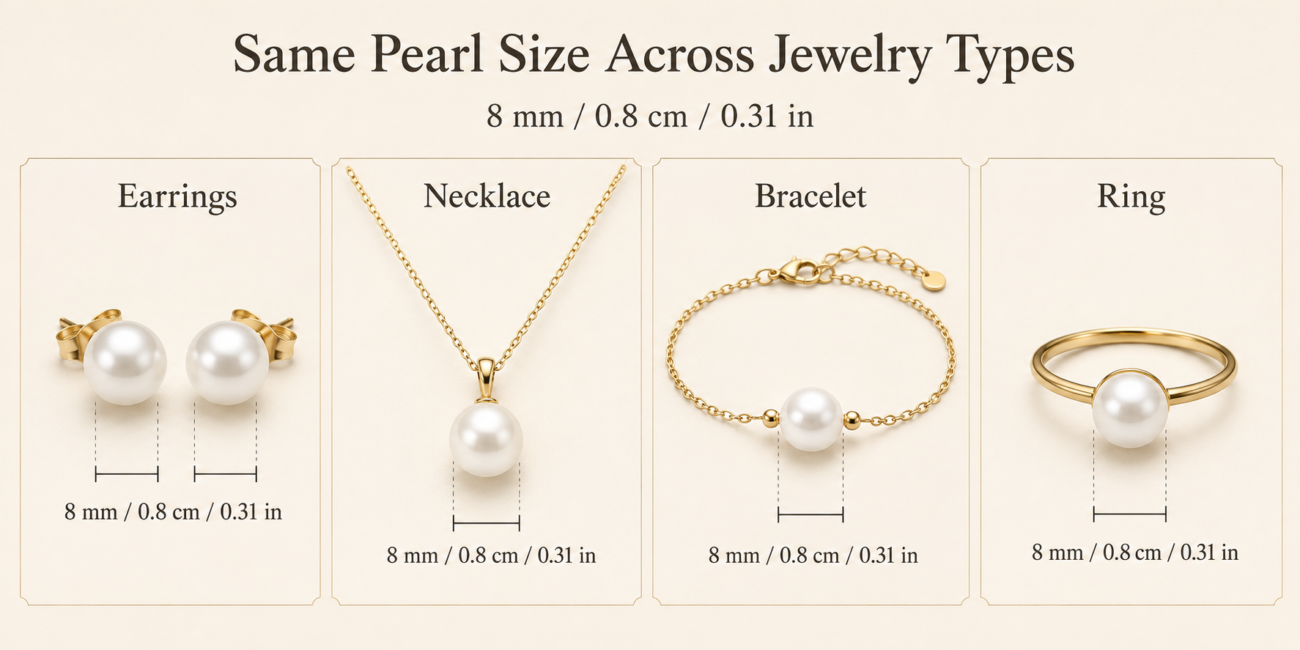
A pearl does not look the same in every type of jewelry.
The metal setting, chain thickness, surrounding stones, clothing, and the wearer’s proportions can all affect how large a pearl appears.
Pearl Earrings
For earrings, pearl size influences how noticeable the jewelry looks near the face.
Smaller pearls often feel delicate and easy to wear. Medium-sized pearls can provide a classic but versatile appearance. Larger pearls create stronger contrast and naturally draw more attention to the face.
The setting also matters. A pearl surrounded by crystals, petals, or metal details may appear larger than a simple pearl stud with the same pearl measurement.
Weight should also be considered. Larger drop earrings may feel heavier than studs, even when the pearl diameter is similar.
When choosing online, review:
- Pearl diameter
- Full earring dimensions
- Earring drop length
- Post or hook material
- Photographs showing the earring on a model
Pearl Necklaces
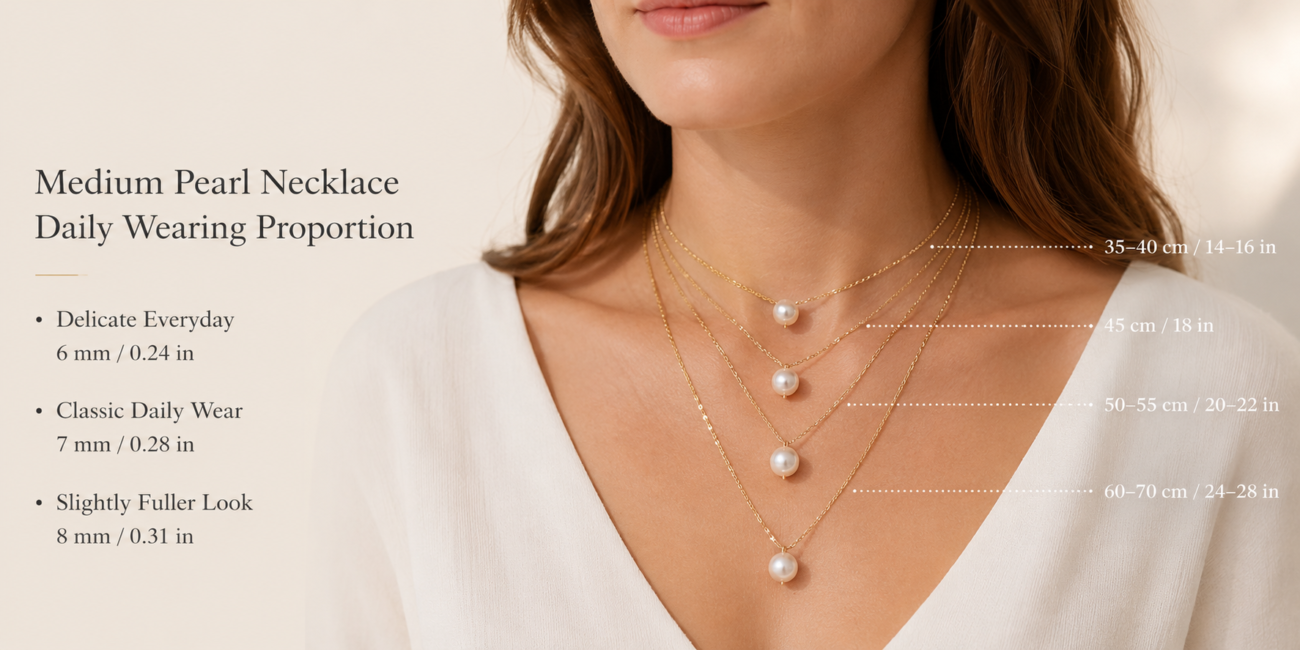
For necklaces, consider both pearl size and necklace length.
A small pearl on a fine chain may create a subtle everyday look. A medium pearl pendant can become a visible focal point without overwhelming an outfit. A larger pearl or baroque pearl may feel more artistic and expressive.
The neckline of your clothing also changes the effect.
A pearl pendant may look more noticeable against a solid-colored top than against a detailed pattern. A shorter necklace sits closer to the face, while a longer pendant creates more visual space around the pearl.
When layering necklaces, choose different chain lengths so the pieces do not compete at the same point on the neckline.
Pearl Bracelets
Bracelets usually include several design elements, so the pearl does not need to be very large to make an impression.
Smaller pearls can create a soft, layered appearance. Medium pearls provide more visible luster. Larger or irregular pearls can give the bracelet a handcrafted and organic character.
For adjustable bracelets, check the complete bracelet length or wrist range rather than looking only at the pearl size.
Also consider whether the pearl will sit on top of the wrist, move freely around the bracelet, or be combined with chains and charms.
Pearl Rings
Pearls on rings often appear more prominent because they are viewed close to the hand.
Even a medium-sized pearl can become the central feature of a ring.
Before purchasing, review:
- Pearl measurement
- Full ring width
- Whether the ring is adjustable
- The height of the setting
- Surrounding stones or metalwork
- Photographs showing the ring on a hand
A close-up product photograph alone can make a pearl ring appear much larger than it will look in real life.
How to Choose a Pearl Size for Everyday Wear
For everyday jewelry, comfort and versatility usually matter more than choosing the largest pearl.
Ask yourself:
- Do I prefer subtle or noticeable jewelry?
- Will I wear it to work, at home, or for special occasions?
- Do I usually wear simple or layered jewelry?
- Do I want the pearl to be the main focus?
- Will I wear the piece frequently?
- Do I prefer lightweight or statement jewelry?
Someone who prefers minimal jewelry may feel most comfortable with pearls around 5–7 mm.
Someone who likes a more visible but still versatile appearance may prefer 7–9 mm.
Someone who regularly wears statement jewelry may feel drawn to pearls around 9 mm or larger.
These are not strict rules. Personal style, comfort, and the overall design are more important than any single number.
A medium pearl may feel bold in a minimal stud but subtle when surrounded by more detailed metalwork. Always consider the complete piece instead of evaluating the pearl measurement alone.
How to Choose a Pearl Size as a Gift
When buying pearl jewelry for someone else, a medium size is often easier to wear across different outfits and occasions.
Before choosing, consider:
- The jewelry she already wears
- Whether her style is minimal or expressive
- Whether she prefers gold-toned or silver-toned metal
- Whether the gift is intended for daily wear or a special event
- Which type of jewelry she wears most often
- Whether she prefers classic, romantic, or modern designs
For someone who rarely wears jewelry, a delicate pendant or smaller pearl earrings may feel more comfortable.
For someone who enjoys accessories, a larger pearl, drop earring, statement ring, or detailed design may feel more personal and exciting.
When uncertain, focus on the complete design rather than choosing only by pearl size.
A pearl gift should feel easy for the recipient to wear—not like something that must be saved for a rare occasion.
Does a Larger Pearl Mean Better Quality?
No.
Pearl size is only one characteristic. A larger pearl is not automatically more beautiful or higher quality than a smaller pearl.
According to GIA, size is one of seven pearl value factors. The others are:
- Shape
- Color
- Luster
- Surface quality
- Nacre quality
- Matching
When the other quality factors are equal, a larger pearl of the same type is generally more valuable than a smaller one. However, this does not mean that size should be judged alone.
A smaller pearl with strong luster, an attractive surface, and thoughtful craftsmanship may be more appealing than a larger pearl with dull reflections or a poorly finished setting.
Other details that influence the quality and value of a finished piece include:
- Metal material
- Clasp and setting condition
- Design complexity
- Matching within earrings or strands
- Construction quality
- Overall wearing effect
Size can influence price, but it is never the only factor. Read our guide to how much real pearls cost to understand how luster, surface quality, matching, metal materials, and craftsmanship affect the final price.
Why Product Photos and Measurements Both Matter
Close-up jewelry photography helps you see surface texture, luster, shape, and design details, but it can make pearls appear much larger than they are.
Before purchasing, review:
- Pearl size in millimeters
- Full jewelry dimensions
- Necklace or bracelet length
- Earring drop length
- Photographs showing the jewelry being worn
- Images beside a hand, ear, neckline, or other scale reference
- Product descriptions and material details
Using both photographs and measurements gives you a more realistic understanding of how the jewelry may look when it arrives.
Also look for multiple viewing angles. A single front-facing photograph may not show the height of a ring setting, the length of a pendant, or the way a drop earring moves.
For a complete product-page checklist, read our guide on how to buy pearl jewelry online before placing an order.
Natural Variations in Freshwater Pearls
Genuine cultured freshwater pearls are naturally individual.
You may notice subtle differences in:
- Shape
- Size
- Color
- Surface texture
- Luster
- Tone
- Reflection
These differences are not automatically defects. They are part of the natural character of cultured freshwater pearls and can make each piece feel more personal.
A pearl does not need to be perfectly identical to every other pearl to be genuine or beautiful.
These natural differences are part of real cultured pearl jewelry. Our guide explaining whether freshwater pearls are real shows how cultured pearls differ from manufactured imitation beads.
What LumiSerene Shows Before You Buy
At LumiSerene, we believe customers should understand the size and wearing effect of a piece before placing an order.
Our product pages provide relevant pearl measurements, jewelry dimensions, metal materials, natural-variation information, and care guidance whenever applicable.
Because cultured freshwater pearls are naturally individual, small differences in size, shape, tone, and surface may occur. These variations are part of the pearl’s organic character rather than signs of machine-made uniformity.
Each piece is carefully checked for pearl appearance, setting condition, clasp or component function, and overall presentation before packing.
Every order is prepared with a jewelry box, care card, and soft cleaning cloth.
For eligible U.S. orders, LumiSerene currently provides tracked delivery, 30-day returns for unworn and eligible items returned in their original condition, and a 30-day quality promise for qualifying damage, defects, or incorrect items.
Frequently Asked Questions About Pearl Sizes
What is the most popular pearl size for everyday earrings?
Pearls around 6–8 mm often provide a versatile balance between subtle and noticeable.
However, the best size depends on the earring design, the wearer’s style, comfort preferences, and whether the jewelry is intended for daily wear or special occasions.
Is 7–8 mm considered a large pearl?
A 7–8 mm pearl usually creates a visible but wearable appearance.
It can feel classic in a simple stud or more modern when used in a pendant, ring, or minimal metal setting.
Are 9–10 mm pearls suitable for everyday wear?
They can be, especially for someone who enjoys noticeable jewelry.
Comfort also depends on the weight, setting, earring post, chain, and overall construction of the piece.
Do larger pearls always cost more?
Larger pearls generally cost more when the pearl type and all other quality factors are similar.
Luster, surface quality, shape, nacre, matching, metal materials, construction, and craftsmanship also influence price.
What pearl size is best for a gift?
Medium-sized pearls are often versatile gift choices, but the complete design matters more than size alone.
Consider the recipient’s usual jewelry, preferred metal color, personal style, and whether the piece is intended for everyday wear or a special occasion.
What pearl size is best for a first-time buyer?
Pearls around 6–8 mm are often comfortable starting points because they are visible without feeling overly bold.
A delicate pendant, small drop earring, or classic stud can be easy to combine with different outfits.
The Best Pearl Size Is the One You Will Actually Wear
There is no single perfect pearl size for everyone.
Small pearls can feel soft and understated.
Medium pearls can feel versatile and timeless.
Larger pearls can feel expressive and confident.
Instead of asking only which size is best, ask which size feels most like you.
The right pearl should not make you feel as though you are dressing as someone else. It should fit naturally into your wardrobe, your lifestyle, and the story you want the jewelry to carry.
Once you choose a comfortable size, our guide to styling pearl jewelry offers ideas for casual outfits, workwear, layered necklaces, celebrations, and meaningful gifts.
Whether you choose a delicate everyday pearl or a more noticeable statement piece, the most meaningful jewelry is often the jewelry you reach for again and again.
Choose the Pearl Size That Feels Like You
Choose a pearl size that feels natural with your wardrobe, lifestyle, and personal story.
Explore cultured freshwater pearl jewelry designed for everyday wear, meaningful gifts, and life’s next chapter.
EXPLORE PEARL JEWELRY
3 thoughts on “Pearl Size Guide: How to Choose the Right Size for Everyday Jewelry”