Knowing how to care for pearl jewelry helps preserve the natural beauty of freshwater pearls for years. Pearl jewelry has a quiet kind of beauty, with a soft glow that feels elegant without trying too hard.
But pearls are different from diamonds, metal jewelry, and many other gemstones. Their surfaces are naturally delicate, which means they benefit from a little extra care.
The good news is that caring for pearl jewelry does not need to be difficult. A few gentle habits can help protect the natural luster of your freshwater pearls and keep each piece looking beautiful for longer.
In this guide, we will explain how to clean pearl jewelry, whether pearls can get wet, how to store them, and which common cleaning methods should be avoided.
The Quick Answer: How Should You Care for Pearl Jewelry?
Learning how to care for pearl jewelry is simple when you follow a few gentle everyday habits.
- Put pearls on after applying makeup, perfume, lotion, and hairspray.
- Remove them before showering, swimming, exercising, or sleeping.
- Wipe the pearls gently with a soft, clean cloth after wearing them.
- Store each piece separately in a soft pouch or lined jewelry box.
- Avoid ultrasonic cleaners, steam cleaners, alcohol, toothpaste, and harsh jewelry-cleaning products.
- Use lukewarm water and a very small amount of mild soap only when deeper cleaning is necessary.
A helpful rule to remember is:
Last on, first off.
Your pearls should be the last thing you put on when getting ready and the first thing you remove when you return home.
Why Do Freshwater Pearls Need Gentle Care?
Pearls may look smooth and luminous, but their surfaces are softer than many other gemstones.If you are new to freshwater pearls, you can learn more about how to identify authentic pearls in our guide: Are Freshwater Pearls Real?
The Gemological Institute of America explains that pearls rank approximately 2.5 on the Mohs hardness scale. This means they can be scratched by harder jewelry, rough surfaces, and abrasive cleaning materials.
Pearls may also be affected by heat, acids, cosmetics, perfume, hairspray, and even perspiration over time.
This does not mean pearl jewelry is too fragile for everyday wear. It simply means that pearls should be treated differently from harder jewelry.
With thoughtful care, freshwater pearl jewelry can remain part of your everyday life for many years.
Follow the “Last On, First Off” Rule
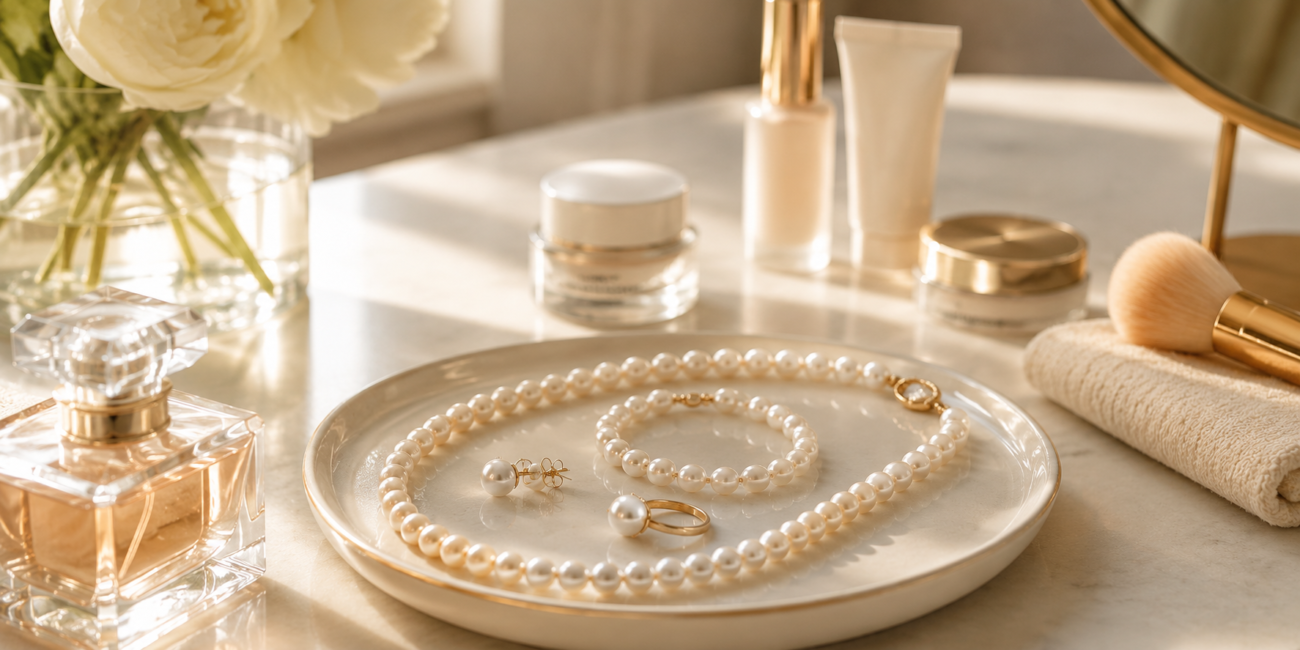
One of the easiest ways to protect pearl jewelry is to change the order in which you get ready.
Apply the following products before putting on your pearls:
- Skincare
- Sunscreen
- Makeup
- Body lotion
- Perfume
- Hairspray
- Hair products
Allow these products to dry before wearing your jewelry.
At the end of the day, remove your pearls before changing clothes, washing your face, or taking a shower. This reduces unnecessary contact with water, cosmetics, fabric, and household products.
It may feel like a small habit, but it can make a meaningful difference in protecting the surface and luster of your pearls.
Can Pearls Get Wet?
A small accidental splash will not usually ruin pearl jewelry immediately. However, pearls should not be exposed to water repeatedly or soaked for long periods.
Water can leave residue on the pearl surface, while soaps, shampoos, chlorine, salt water, and other chemicals may affect both the pearls and the metal components of the jewelry.
For this reason, it is best to remove pearl jewelry before:
- Showering
- Swimming
- Exercising
- Washing dishes
- Cleaning the house
- Entering a hot tub or sauna
- Sleeping
Extra care is especially important for traditional strung pearl necklaces. Water can weaken, stretch, or soil the thread between the pearls if it does not dry properly.
If your pearl jewelry gets wet, gently pat it dry with a soft cloth and allow it to air-dry completely before storing it.Learn more about pearl quality and materials in our guide to freshwater pearls.
How to Clean Freshwater Pearl Jewelry at Home
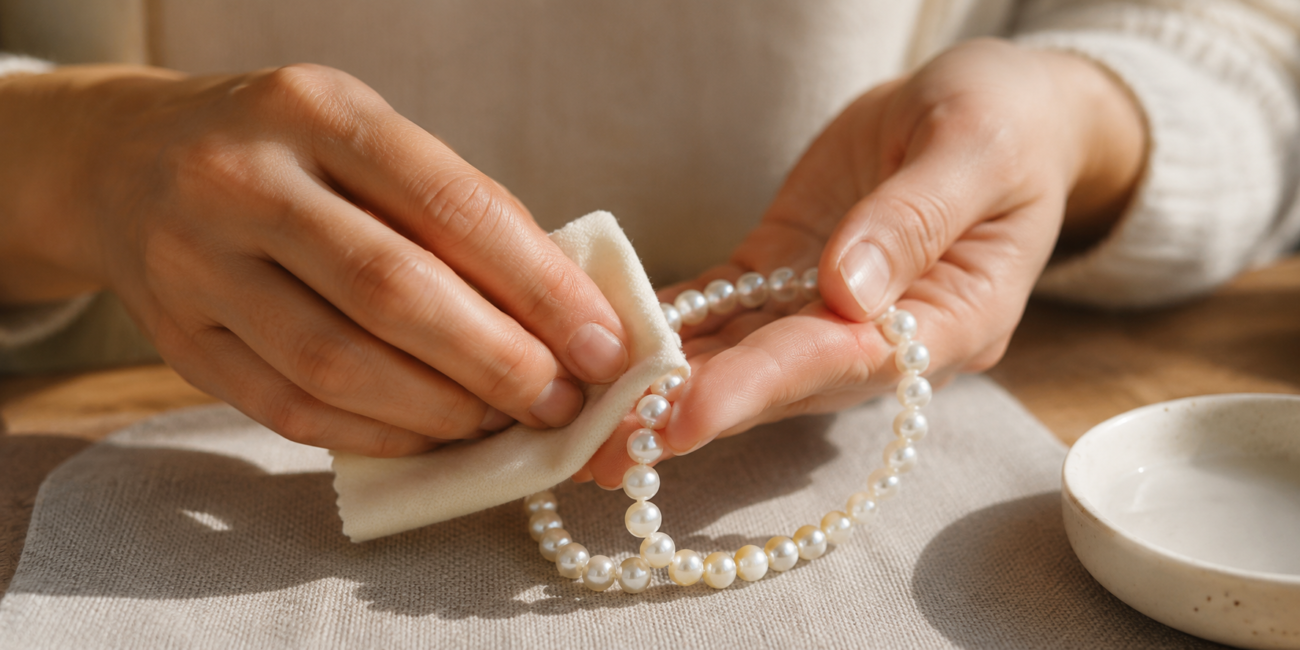
For regular care, learning how to care for pearl jewelry properly means you do not need complicated cleaning routines. Wiping it after each wear is often enough.
When your jewelry needs a more thorough cleaning, follow these steps.
Step 1: Prepare a Soft Cloth
Use a clean, soft, lint-free cloth.
Avoid paper towels, tissues, rough towels, or old cloths that may contain dust and particles. Even small abrasive particles may leave fine scratches on the pearl surface.
Step 2: Use Lukewarm Water
Dampen the cloth lightly with lukewarm water.
Do not use very hot or very cold water. Sudden temperature changes and excessive heat are not suitable for pearls.
Step 3: Add a Small Amount of Mild Soap if Needed
For visible residue, add a tiny amount of mild, fragrance-free soap to the water.
Avoid strong detergents, bleach, ammonia, alcohol, acidic cleaners, and general-purpose jewelry-cleaning liquids unless they are specifically confirmed to be safe for pearls.
Step 4: Wipe Gently
Gently wipe each pearl instead of scrubbing it.
Pay attention to areas that regularly touch the skin, such as the back of pearl earrings, the center of a necklace, or the inside of a bracelet.
For jewelry that combines pearls and metal details, clean carefully around the setting without pulling, bending, or twisting the piece.
Step 5: Dry Completely
Use a second clean cloth to remove moisture, and then place the jewelry on a soft towel to air-dry.
Do not use a hair dryer, heater, radiator, or direct sunlight.
For strung pearl necklaces, allow the thread to dry completely before moving, wearing, or storing the necklace.
What Should You Never Use to Clean Pearls?
Some popular jewelry-cleaning methods are too harsh for pearls.
Avoid using:
- Ultrasonic jewelry cleaners
- Steam cleaners
- Toothpaste
- Baking soda
- Alcohol
- Bleach
- Vinegar
- Lemon juice
- Strong detergents
- Abrasive brushes or sponges
- Treated metal-polishing cloths directly on the pearls
Ultrasonic and steam cleaners may be suitable for certain kinds of jewelry, but they should not be used on pearls. GIA specifically advises against both methods for pearl cleaning.
Toothpaste and baking soda are also unsuitable because their abrasive texture may gradually scratch the surface.
When in doubt, choose the gentlest option: a soft cloth, lukewarm water, and minimal handling.
How Often Should You Clean Pearl Jewelry?
The best pearl-care routine is simple.
After Every Wear
Wipe your pearls gently with a soft, dry cloth.
This helps remove natural skin oils, perspiration, cosmetic residue, and environmental dust before they remain on the surface.
When Visible Residue Appears
Use a lightly dampened cloth. Add a small amount of mild soap only when necessary.
Pearls do not need frequent deep cleaning when they are wiped regularly.
Before Long-Term Storage
Make sure the jewelry is clean and completely dry before placing it in a pouch or jewelry box.
When Damage or Looseness Appears
Stop wearing the piece if you notice:
- A loose pearl
- A bent setting
- A damaged clasp
- A stretched thread
- Fraying between pearls
- An unstable earring post
A professional jeweler should inspect or repair the piece before it is worn again.
How to Store Pearl Jewelry Properly
Proper storage is an important part of how to care for pearl jewelry, helping protect pearls from scratches, pressure, and environmental damage.
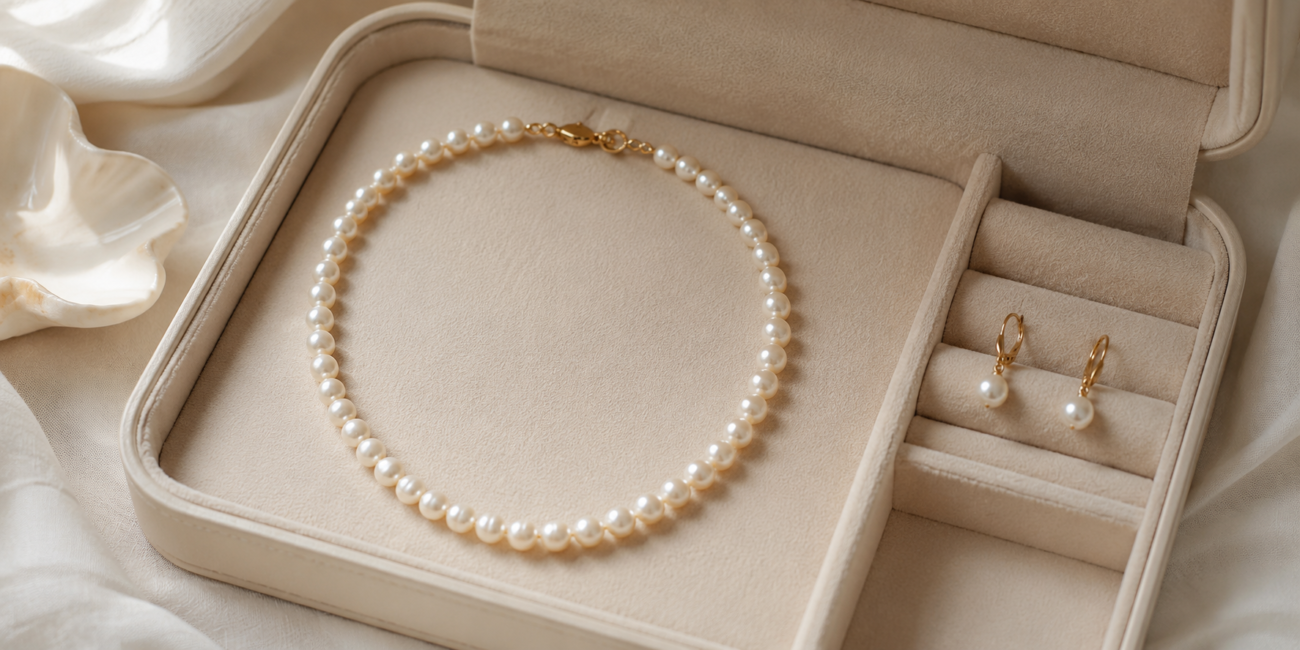
Store Pearls Separately
Do not place pearl jewelry loosely beside diamonds, metal chains, or other hard jewelry.
Instead, keep it in:
- A soft fabric pouch
- A lined jewelry box
- A separate padded compartment
- Its original jewelry packaging
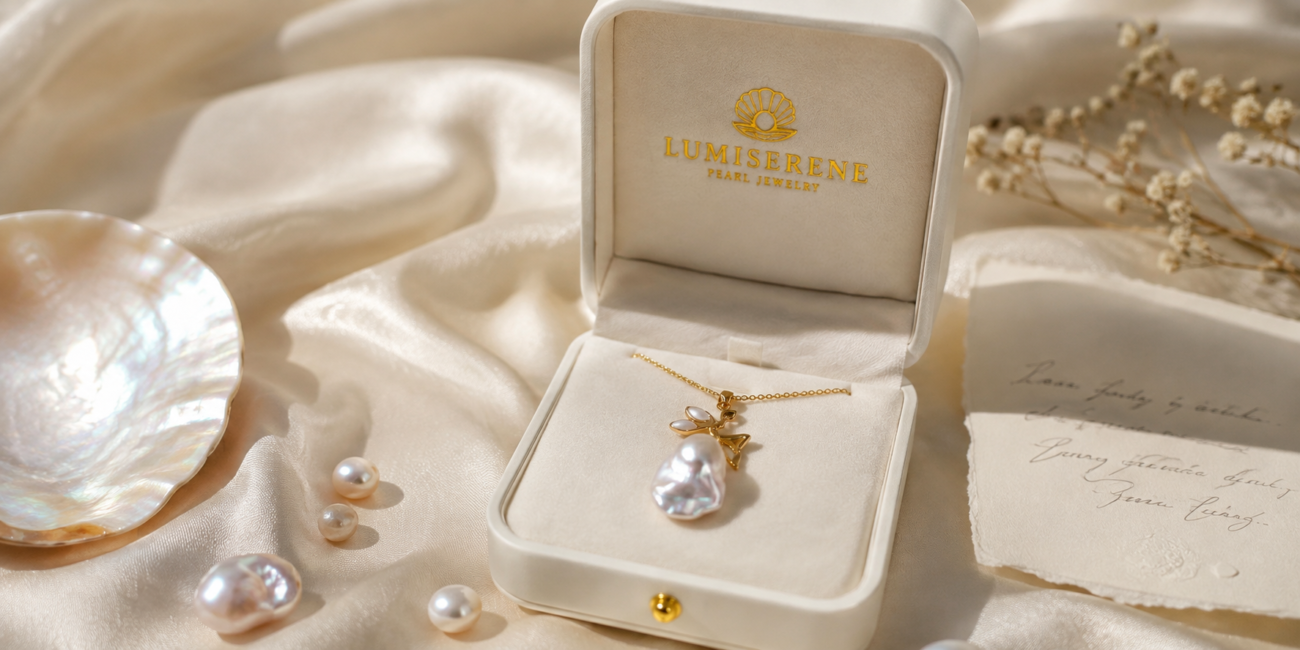
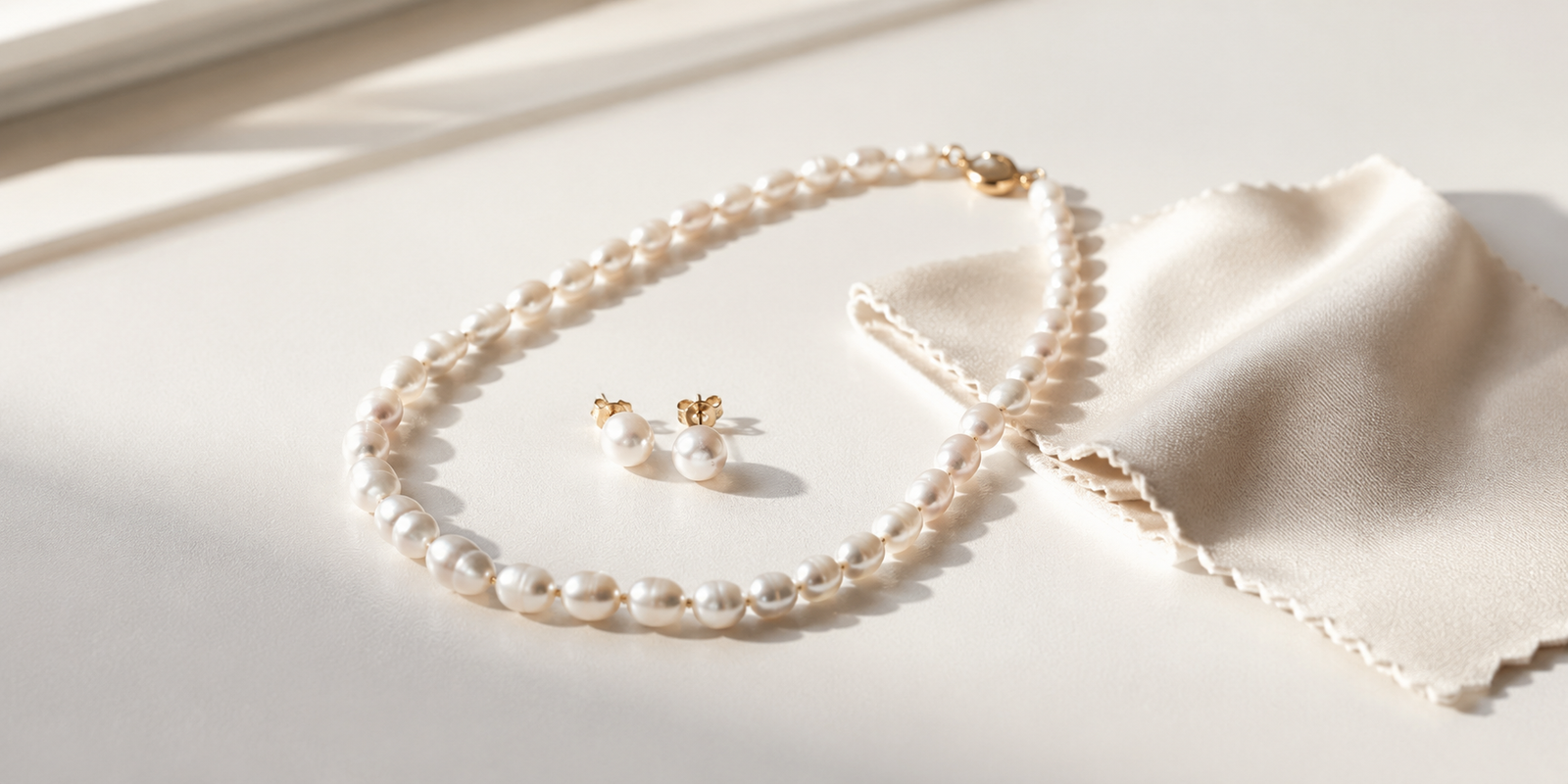
Every LumiSerene order includes thoughtful care details and a soft cleaning cloth, making it easier to care for your jewelry after each wear.
Keep Necklaces Flat
Traditional strung pearl necklaces are best stored flat rather than hanging for long periods.
Hanging may place unnecessary tension on the thread and gradually cause it to stretch.
Avoid Hot and Extremely Dry Places
Do not leave pearl jewelry near heaters, windows with strong sunlight, or other high-temperature areas.
Avoid storing it for extended periods in extremely dry environments.
Prevent Tangling and Pressure
Fasten necklace and bracelet clasps before storing them. Make sure chains are not wrapped tightly around the pearls.
Do not place heavy jewelry or objects on top of pearl pieces.
Pearl Care Tips for Different Types of Jewelry
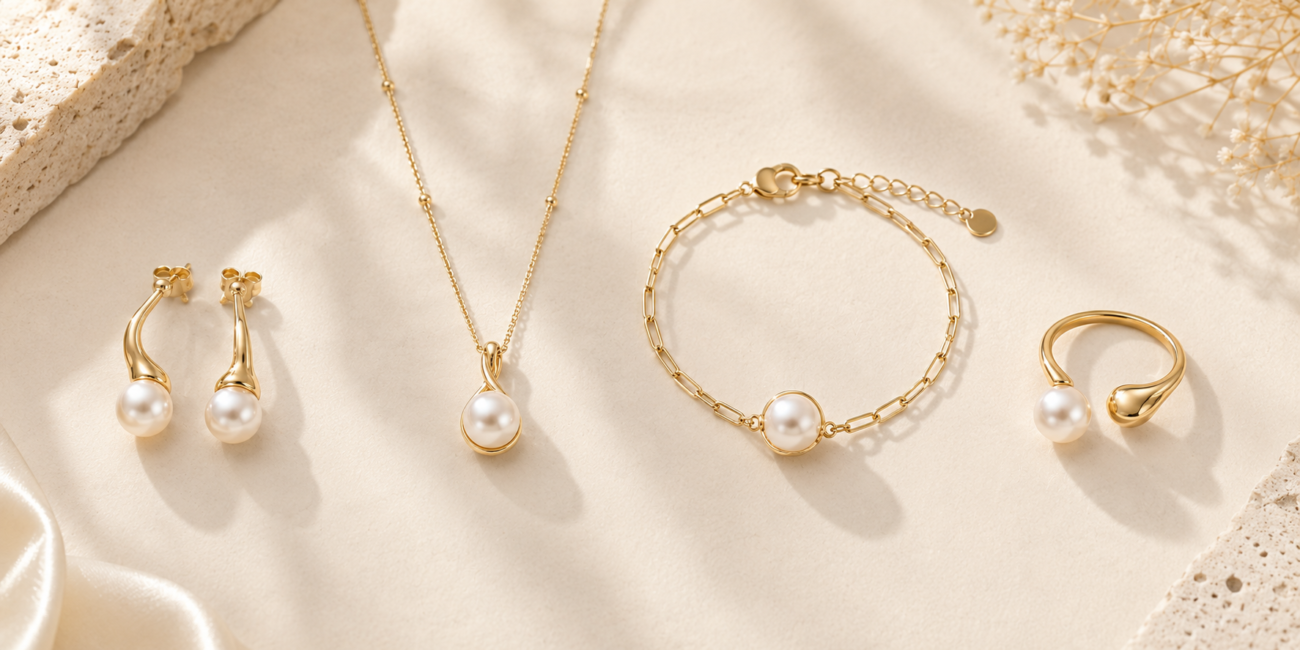
Different pieces experience different kinds of contact during everyday wear.The right pearl size can also change the overall feeling of your jewelry. Learn more in our Pearl Size Guide.
Pearl Necklaces
Pearl necklaces regularly touch perfume, body lotion, skin, and perspiration.
Apply fragrance before wearing the necklace, and wipe the pearls after each use. Store traditional strands flat and check the thread periodically for stretching or wear.
Pearl Earrings
Pearl earrings may come into contact with hairspray, shampoo residue, skincare, and makeup.
Put them on after styling your hair. Wipe the pearl and metal post carefully after wearing them.
Do not apply alcohol or metal disinfectant directly to the pearl surface.
Pearl Rings
Rings experience more contact and impact than most jewelry.
Remove pearl rings before washing your hands, cleaning, cooking, exercising, or applying hand sanitizer and lotion. Avoid knocking the pearl against desks, doors, or hard surfaces.
Pearl Bracelets
Bracelets can rub against tables, laptop edges, clothing, and bags.
Remove pearl bracelets during activities involving repeated friction or pressure. Store them separately so chains and clasps do not scratch the pearls.
Can You Wear Pearl Jewelry Every Day?
Yes, pearl jewelry can be part of your everyday style.
The key is choosing the right moments to remove it.
Wearing pearls to work, dinner, a celebration, or a relaxed day out is usually fine. Activities involving water, chemicals, heat, friction, or impact are more likely to cause damage.
Daily wear can remain gentle and practical when you follow three habits:
- Put your pearls on last.
- Take them off before water or physical activity.
- Wipe them before storing them.
Pearls do not have to stay hidden away for special occasions. They are meant to become part of the moments and chapters that matter to you. For more everyday inspiration, explore our guide on How to Style Pearl Jewelry.
Frequently Asked Questions About Pearl Care
Can I shower while wearing freshwater pearls?
It is best to remove freshwater pearl jewelry before showering. Repeated exposure to water, shampoo, soap, and heat may affect the pearls, metal components, or stringing material over time.
Can I sleep while wearing pearl jewelry?
Sleeping in pearl jewelry is not recommended. Pressure, friction, pulling, and contact with skincare or hair products may damage the pearls or jewelry setting.
Can I clean pearls with alcohol?
Do not apply alcohol directly to pearl surfaces. Alcohol and other strong cleaning products may damage or dull delicate pearl surfaces.
Can I use a silver-polishing cloth on pearl jewelry?
A treated polishing cloth may be suitable for certain silver components, but it should not be rubbed against the pearls. Use a separate soft, untreated cloth for the pearl surface.
Why do my pearls look less shiny?
Cosmetic residue, perspiration, skin oils, dust, scratches, or improper cleaning may reduce the visible luster. Begin by gently wiping the pearls with a clean, soft cloth. Seek professional advice if the surface appears damaged.
How should I travel with pearl jewelry?
Place each pearl piece in a separate soft pouch or padded compartment. Do not allow it to move freely beside harder jewelry, metal chains, or sharp objects.
A Little Care for Something Meaningful
Pearl jewelry often becomes connected to a feeling: confidence before an important day, comfort during a new beginning, or a quiet reminder to choose yourself.
Caring for it can be just as simple and meaningful. Knowing how to care for pearl jewelry helps preserve both its natural beauty and the memories connected to it.If you are choosing your first pearl piece, our guide on How to Buy Pearl Jewelry Online can help you make a more confident choice.
Put your pearls on after you are ready. Wipe them gently when the day is over. Give them a soft, protected place to rest.
A little care helps preserve more than their natural glow. It helps protect the memories and meaning they collect along the way.
You’re already reason enough.
A little light, just for you.